

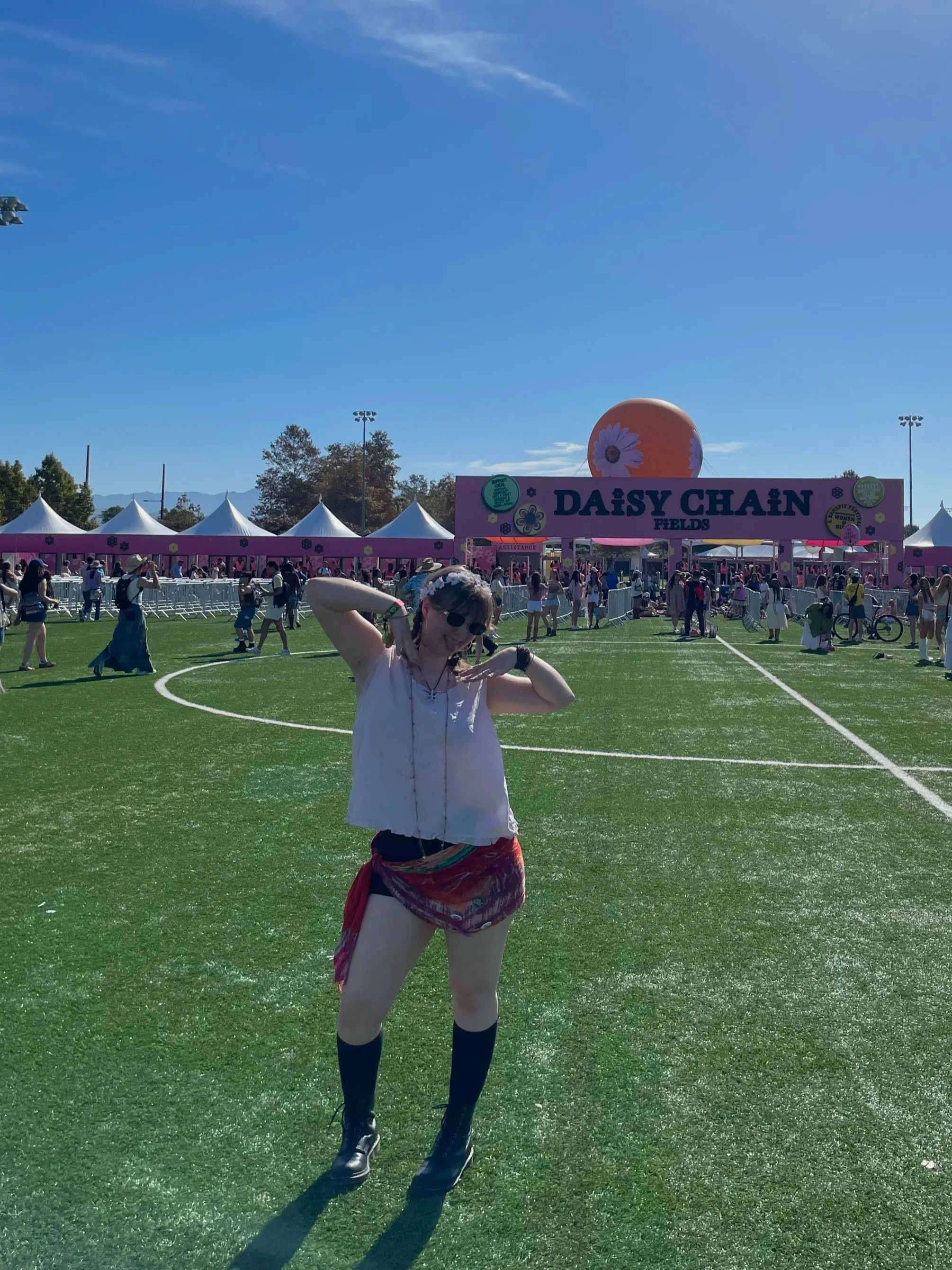
Picture a day that’s an all-girl utopia, where the only men in sight were girl dads, bisexual boyfriends, or gay allies. Bathroom lines for the women's restrooms eventually converge with the men's line, and men, though confused, relinquish the men's bathroom stalls to women. Everything is pink, floral, colorful, and out of a Willy Wonka, or Pixie Hollow type of magical land. Everyone is unabashedly kind and engages in conversations with each other, swapping compliments, life stories, trinkets and crafts, as if they have always been best friends with each other. Two months ago I went to the inaugural Daisy Chain Fields Festival, and I already miss it.
This was the first festival I’d ever attended, but the second I secured my tickets at pre-sale, I knew I was about to be a part of something bigger than myself. Daisy Chain Fields Festival was put on by Olivia Rodrigo as a non-profit, all women-led and headlined one-day music festival, in which all proceeds were given to groups dedicated to women's rights. The festival raised a total of 20 million dollars, which were evenly split among ten non-profit groups.

A big part of what made Daisy Chains feel so welcoming and communal, was the diversity of music. There was 90s rock, punk, metal, lo-fi, indie/alternative, rap, pop, from a wide range of different artists of different ages and backgrounds. There truly was something from everyone, and everyone was there. From little girls experiencing their first concerts, to tried and true veterans of the original Riot Grrrl movement, women from all walks of life filled Daisy Chain Fields.
I got to the festival an hour early to wait in line, and was among the first 200-(ish) people inside. The first thing I immediately did was get merch. For a total of $80 I got a baseball hat, a pink screenprinted baby tee, and a zine that all musical artists at the festival contributed to making. Although I was last in line for merch, at the end of the fence, it only took me about 10 minutes to get to the front. Lines moved faster at Daisy Chains than they do at my local county fair.
A little later in the day, I waited about 20 minutes in line for Etsy’s bead fountain, one of the many free experiences at the festival. I was ten people from the front when I decided to bail so I could catch Die Spitz’s act. There were several brand experiences at Daisy Chains, where the only cost to participate was waiting in line (which sometimes could take more than an hour).
Etsy hosted a “creative village” where women-owned businesses could sell their art, or you could make your own keychains and charms from a fountain in the center of the village that literally poured beads. Athleta had free coconut water in real coconuts, and a meditation tent that played soundscapes for those who needed a breathing break. Taco Bell handed out Olivia Rodrigo’s “you seem pretty pink for a baja blast” at their hot pink tent. Many more activities were tucked into Great Park, the area in Irvine in which Daisy Chains was held, so many in fact that it was virtually impossible to visit all of them and still see all the musical acts.
Musical acts planned by Olivia Rodrigo never overlapped and were held at two stages on opposite sides of the park (about a ten minute walk to get from one to the other). My main focus was catching as many of the musical acts as I could, so in between sets I found the shortest food line on my way to the next stage (which ended up being Vegan Filipino food, which I got in less than 10 minutes).
Shade was never hard to find. You would probably end up with a mediocre view of the stage and its screens, but there was plenty of shade, trees, and seating around the park. The heat was no joke. The high of the day was more than 100 degrees, and after an hour of moshing at Bikini Kill’s set, I spent Mitski and the Breeders’ sets lying underneath a tree with ice on my forehead, chugging water. But one major benefit of only one artist playing at a time is you could hear their music no matter where in the park you were.
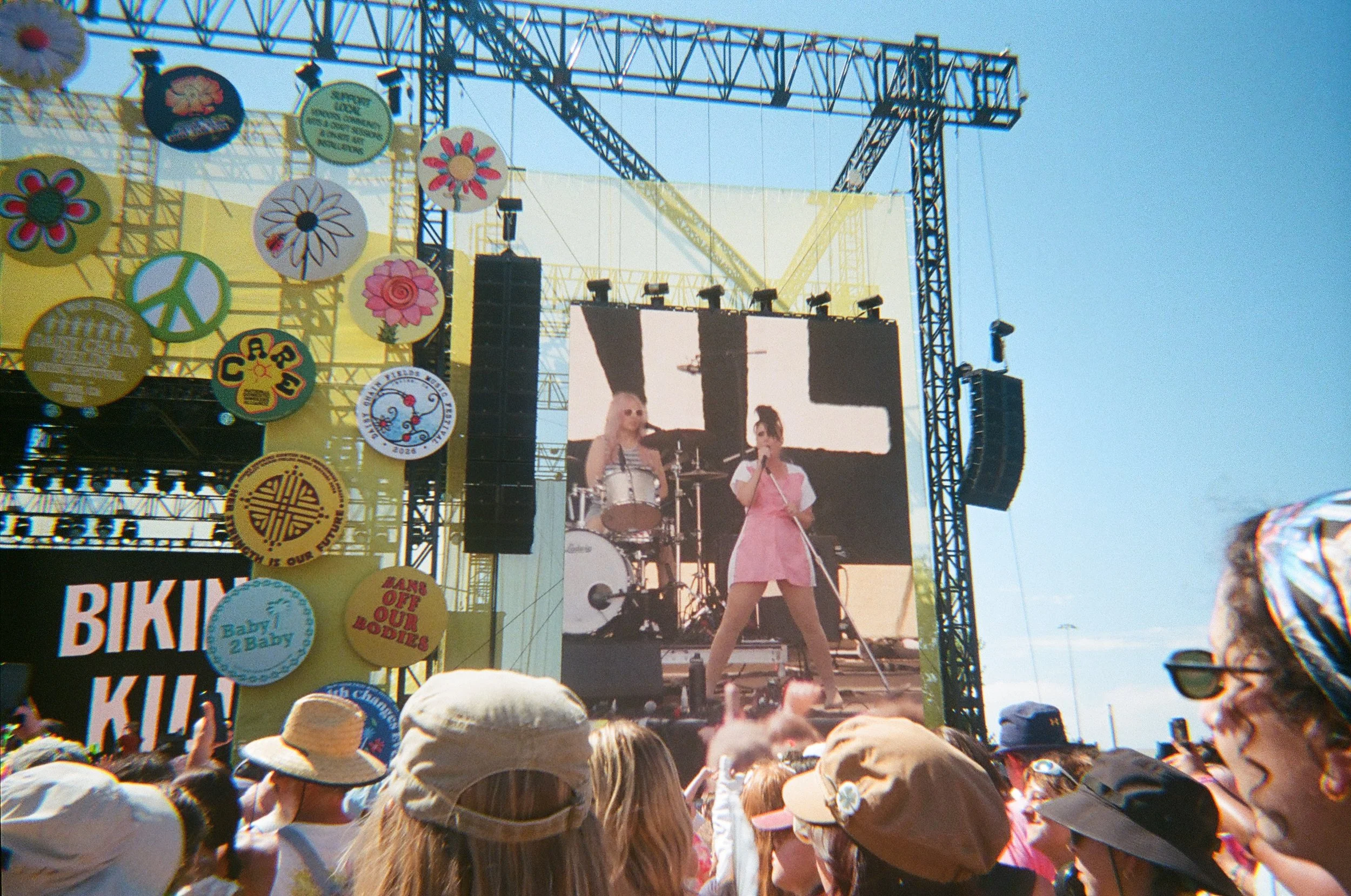
The musical acts were beyond incredible, I got to see some of my all time favorite bands, and stood within a foot of one of my personal heroes, Shirley Manson, lead singer of Garbage. Every set was opened with a spokesperson of one of the non-profits the festival was created to support, before diving into the music. Almost every artist talked about their “why” they found it so important to perform for free at a festival like this, making the day feel all the more personal and connected.
The day felt like a big celebration of feminine energy and our strength to have persevered this long. Coming back home after leaving the festival felt like a massive crash. I went back to my job where I am the only girl lead and deal with direct and indirect sexism every day. I went back to being hesitant about going out at night. To say it was depressing leaving Daisy Chains after experiencing a day of matriarchy is truly an understatement. I don’t like that writing about the festival makes me feel sad now, because all I can think of is how much this festival made me realize we as women settle for so much in real life. We compromise our safety, representation, quality, and community, just for the comfort of those in positions of power that they did not earn. The good news is the festival gave me hope, and gave me an image of what we’re really fighting for. It made me feel more connected to the people around me. A month ago, at a Sleater-Kinney concert, I met two women in their late 50s wearing Daisy Chains shirts, and we talked about how meaningful the festival was to us. We showed each other our photos from the day, and they gave me a bracelet with a Bikini Kill lyric on it, “suck my left one.” It’s easy to forget the end goal when the current day is so bleak, but to have caught a glimpse into what our world could look like, was the push of hope I needed.