
New York City in the late 1970s had a lot going on. With the opening of the uber-successful Studio 54, the rise and fall of disco music, and Warhol Superstars becoming a symbol of struggling artists breaking into the popular culture, all occurring within a mere decade, it is easy to forget about the emergence of the Neo-Expressionist art and No Wave movements. The movements were closely intertwined and considerably contributed to the future of contemporary art and indie rock as we know it to be today.
The Neo-Expressionist movement emerged in America as a response to the clean “intellectualism” and elitism that had been prevalent in the arts for centuries, and the No Wave movement was created as a rejection of the mainstreaming of the polished “punk” sound that was circulating around NYC and London at the time. With the underlying themes of individualism, protecting creativity from corporate greed, and rejection of the “new and clean” norm, present in both of the movements, it's no wonder that many artists chose to dabble in both mediums.
Jean-Michel Basquiat was a prominent leader in both scenes. He started out tagging his art in the streets of New York City while in high school. “Same Old Shit” or SAMO was a character that Basquiat stamped as one of the first famous Neo-Expressionist art pieces, thrown up on the walls of the Lower East Side in NYC. SAMO got local attention around downtown New York, specifically in artistic and alternative scenes, which launched Basquiat's career as an artist and persona to keep track of. From there, he was invited to participate in galleries, exhibitions, and the variety TV show “TV Party” as a recurring guest to highlight his innovative pieces. In April 1979, Basquiat approached indie filmmaker and known subculturalist, Michael Holman at a party, stating that he was a fan of his work and would like to potentially collaborate on some musical projects. That conversation led to the creation of GRAY.
GRAY might not have lasted long, but their impact is inarguable. They rejected the concept of “being a musician” and refused to learn how to play their instruments before playing shows. Their sound was raw, abrasive, unplaceable, and unconventional. Their music was hard to replicate and their live shows were never the same on a week-to-week basis, unlike the routine focus that many musicians at the time had. They marketed themselves more as “performing artists” than musicians and wanted to give their audience a contemporary experience. GRAY, during its original lineup, was completely independent and refused to even consider the option of joining a record label, despite having probable chances due to the names involved with the band. They broke up in 1981 due to Basquiat's rise as an artist and the desire of other members to try new mediums. In the early 2010s, two of the original members, Michael Holman and Nick Taylor revived the band and made a few records to finish off the act, on their own new record label, Plush Safe Records, and were able to release some of the original music from the 1979-81 run. GRAY might've been one of the first bands to feature visual artists dabbling into No Wave, but they certainly are not the last.
Robert Longo moved to New York City immediately after college to start a career as an artist in a metropolitan area that uplists unconventionality. He originally started as a sculptor, but his main focus quickly became drawings and camera work, such as film and photography. His drawings got him attention because of the large physical scale of the pieces and his strange spin on modern contemporary art and dive into the Neo-Expressionist art movement. He was commissioned to draw the album covers for “The Ascension” by Glenn Branca, an album heavily affiliated with the No Wave movement, and “Tim” by The Replacements. His photography, although not as well recognized, led to work opportunities directing music videos, films, and multimedia theatre inspired pieces. His best known directorial pieces are both music videos, “The One I Love” by R.E.M and “Bizarre Love Triangle” by New Order. Longo was also involved in the band Robert Longo’s Menthol Wars featuring fellow musicians David Linton and Richard Prince, which is now “lost media”, as no musical work from the project has been uploaded to physical or digital media. During the time however, the band was well known around the art world and often performed in spaces that were art dominated, rather than music dominated. The backup guitarist, Micheal Prince, released a book called “Menthol Wars”, which was made as a counterpart to the band. The book is out of print indefinitely, and selling for thousands of dollars on eBay.
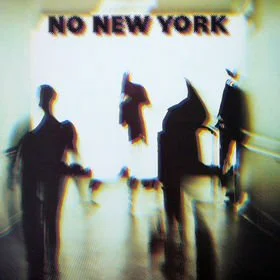
One of the most well-known works from the No Wave era is the “No New York” compilation album, commissioned by Brian Eno. The album was made as a documentation of the Artists Space No Wave Festival that occurred in 1978, which was organized by prominent figures in the scene, Robert Longo and Michael Zwack, as well as hosted by Rhys Chatham. The festival was one of the first organized No Wave shows in the city. The goal of the project was to expose bigger audiences outside of the city to No Wave music. The record featured four up-and-coming No Wave artists James Chance/James Brown as part of Contortions, Teenage Jesus and the Jerks, Mars, and DNA and had 16 songs in total.
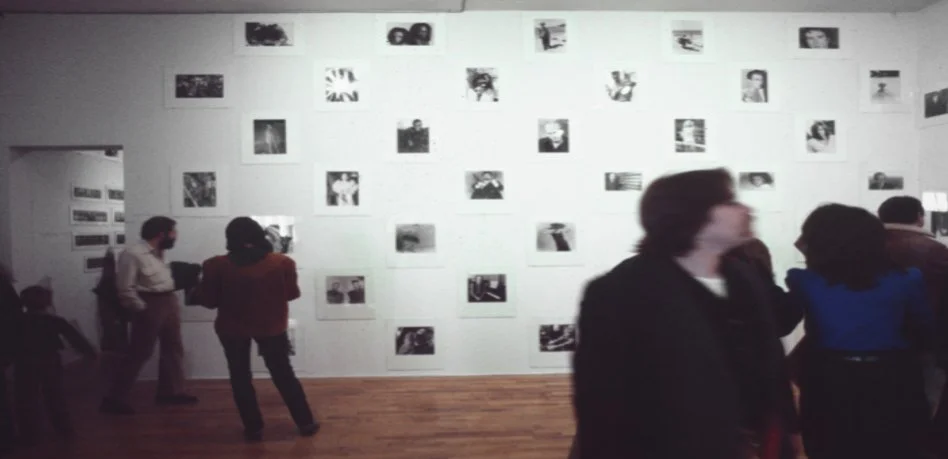
The New York/New Wave exhibition that took place in 1981 at the MoMA PS1, is arguably the biggest crossover of the Neo-Expressionist art and No Wave scenes. Despite the “New Wave” title, the exhibition featured a significant number of artists associated with the “No Wave” movement and was on display toward the end of the peak of the No Wave era of music, but the ascension of Neo-Expressionist art. The show was curated by Diego Cortez, who was one of the founders of the then-popular Mudd Club nightclub. The show skyrocketed the careers of many artists and musicians who were featured, like Jean-Michael Basquiat and Keith Haring. After the show, Neo-Expressionism was everywhere and considered to be the new hope of the New York City art scene.
Neo-Expressionist art and No Wave paved the way for the modern indie scene in both of their respective fields. After the No Wave movement fizzled out in New York City, it didn't take off nationally. Many NYC bands in the following years, such as Sonic Youth and Talking Heads, are similar sonically. Thurston Moore, of Sonic Youth, has stated in an interview that the band was inspired by the “raw attitude” of the No Wave scene. Talking Heads came up around the same time as the No Wave movement and played in many of the same small venues as prominent No Wave artists. As for the Neo-Expressionist era, art that followed tended to be concept-based and focused on social commentary. To this day, indie art and music are incredibly connected, with many artists choosing to expand into many different mediums and subcultures.