
Non-Identification: Linguistic Perceptions of Emotion
Feelings were never meant to define us. They are fluid, mutable expressions of emotion that come and go. They wash over us like the ocean’s waves. The language that we use to define feelings triggered by emotional responses should not be definite, but stated as a temporary experience.
For example, when experiencing the emotion of sadness, rather than saying “I am sad” you can say that “I am feeling sad”. This small distinction is important, because it shapes the way that we communicate with ourselves. This framing can also allow yourself more grace and room to breathe. Instead of being embarrassed, you can emphasize the fact that you’re feeling embarrassed and that the feeling of embarrassment is fleeting. In my personal experience, introspection is a bit more difficult and emotions are harder to process when feelings are viewed as inescapable. I think of this as self-limiting by way of linguistics.
There was a hypothesis formed in the early 20th century that proposed the idea that the language that we use directly affects our perception of the world. The hypothesis is called linguistic relativity, also known as the Sapir-Whorf hypothesis. In an EBSCO article simply titled, Linguistic relativity (Sapir-Whorf hypothesis) the author says that the hypothesis “posits that a person's native language influences their thought processes and perceptions. The theory divides into two forms: the strong form, which suggests language determines thought, and the weak form, which asserts that language exerts a significant influence on cognition”. A few years after this hypothesis was formed researchers decided that there was no evidence to back it up.
Although there is no concrete scientific data to prove that language shapes the way we perceive the world, this is an area of study that is still being revisited that is not necessarily completely discredited at this point in time. There are other aspects of the way that humans define and describe emotions that can be scientifically proven.
In an article by Bonn Institute titled, “The power of language: How words shape thoughts and emotions,” authors Margarida Alpuim and Katja Ehrenberg explain the way in which identifying difficult emotions can provide solace.
“For example, when people give words to negative emotions, they regulate their emotional state and calm themselves down. This is detectable in our brains: Reactivity in the amygdala, which plays a key role in processing emotional stimuli and reactions, decreases when someone labels negative emotional images (7). Even though scientists are not certain yet about why labelling emotions has a comforting effect, one possibility is that it reduces uncertainty (8).”
I think it’s possible to identify your own emotions while also making the distinction between being and feeling. If identifying negative emotions reduces uncertainty, I think it could also be beneficial to apply the “feeling instead of being” framework to further provide reassurance.
In an article titled “Subtle linguistic cues influence perceived blame and financial liability”, written by cognitive scientists Lera Boroditsky and Caitlin M Fausey, they detail the role in which language plays in our perception of blame. Boroditsky states:
"Subtle differences in linguistic descriptions can change how people construe what happened, attribute blame and dole out punishment" (12).
I believe that this same logic can be applied to one’s own thinking about themselves. If linguistic descriptions can change the way that we view situations, then that logic could be applied to the way that we discuss and verbalize our own emotions. I also find it important to note that the language that we use to describe emotion varies by culture, language, and grammatical gender and some words for emotions cannot be translated into other languages.
You don’t have to identify with feelings that do not define you, and the use of language to represent that may offer a positive perspective on situational issues.
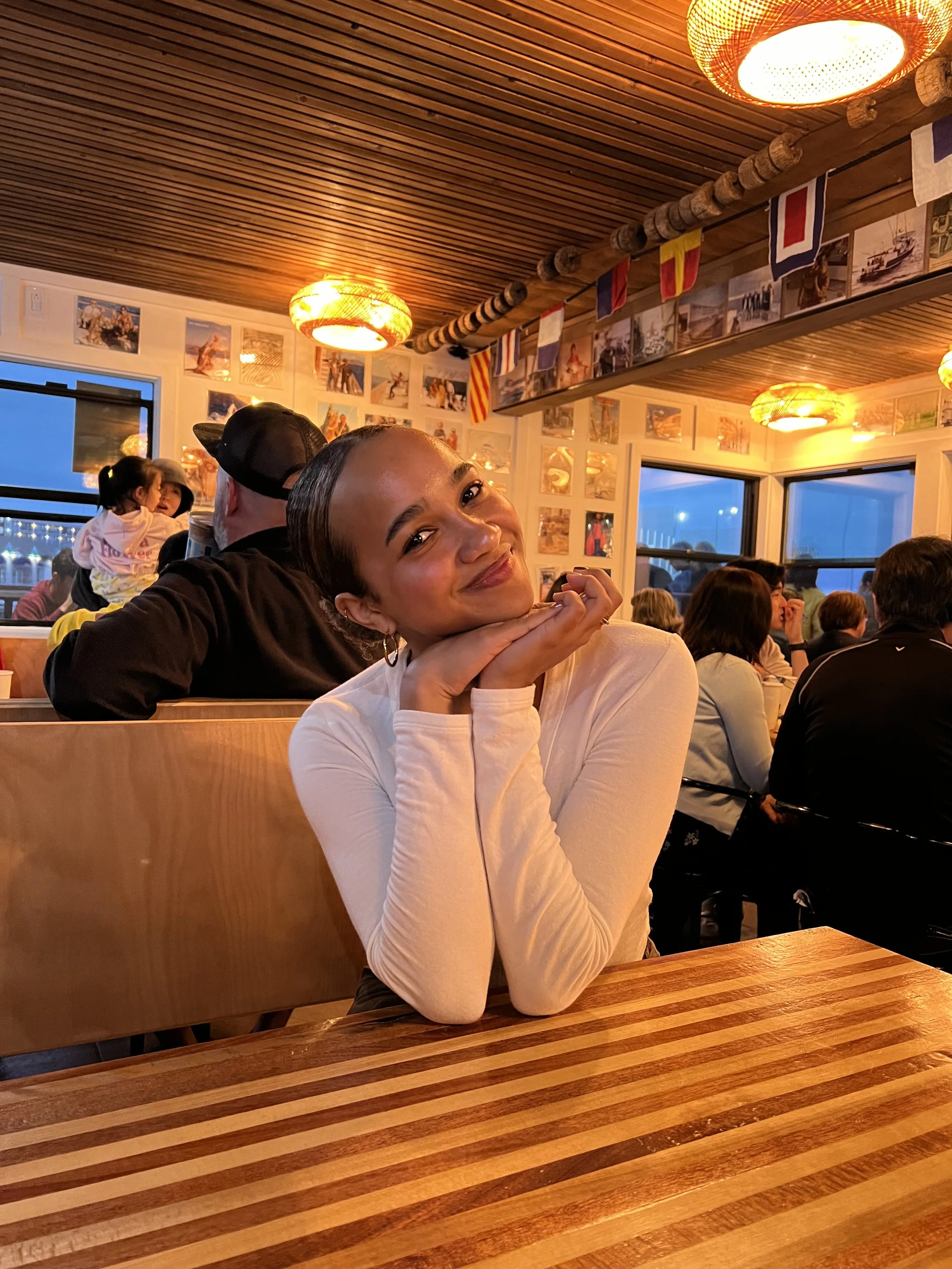
About the author: Nahla Wilson is a senior majoring in English with a minor in digital humanities. Her hometown is Austin, Texas. In her free time, she enjoys hiking, watercolor, trying new food, and finding any excuse to dress up!