
It was fourth grade when I had a history project that required me to record an interview with my grandma. I was recalling this to my grandma the other day, and I realized how much I had misremembered about what she told me. Although mostly small details, I became hyper-aware of how easily I could be confident in something false. I can only imagine later in life when I want to tell the future kids in our family about their history. It becomes this giant game of telephone,, where every generation becomes responsible for preserving stories.
Nowadays it is much easier to record things with digital mediums. But in a time before these innovations, stories and and traditions survived through people simply continuing to tell them. Growing up in Hawaiʻi, I saw how word of mouth still holds an important place in contemporary culture. Stories are shared at family gatherings, while making lei or just while doing the dishes and wiping countertops. Knowledge is not always formally taught; often it is passed naturally through conversation and observation.
As for ancient Hawaiʻi, oral history and storytelling were incredibly valuable. When I started learning ʻōlelo Hawaiʻi (Hawaiian language) in high school, my kumu (teacher) always stressed the importance of listening to our kūpuna (elders) as one of the best ways of learning. Before it became a written language, ʻōlelo Hawaiʻi existed entirely through speech. History, genealogy, and cultural practices were all carried through voice and repetition. In many ways, the language itself was alive because it depended on relationships between people rather than documents or recordings. These people kept past stories alive and were responsible for passing along their own history. It would ultimately accumulate beyond the ability of the next generation to keep them alive and something would fall through the cracks. But that might be what I love about oral tradition. There is an intention in remembering.
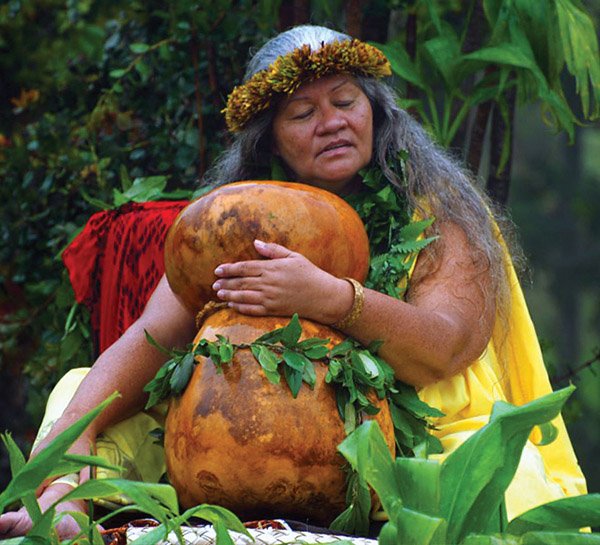
Once missionaries arrived in the Hawaiian Islands and introduced the printing press, Hawaiʻi became highly literate in a relatively short amount of time. Writing became widespread with books and newspapers. While writing helped preserve knowledge, it also changed how people interacted with history and language. Written words can be kept intimately, but oral traditions require community. Someone must be present to speak, and someone else must be willing to listen.
That is what makes oral tradition feel alive to me. Stories are not frozen in time; they adapt to the people carrying them. Kūpuna talking story passes down more than information. It is a record of their tone, humor, and emotions that all become part of the lesson itself. Even the setting matters. Hearing a story while sitting together at the beach or during a family pāʻina (party) creates a different kind of memory than reading words off a page. Oral history is not only about preserving facts but also preserving connection.
In writing this, I have realized something else about that small interview in fourth grade. If you want to have a deep oral history, you have to be able to keep the conversations going.
About the author: Avari Subee is a first year undergraduate student at the University of Oregon majoring in Biology and minoring in Art and Technology. You can most likely find her reading a lit-fic or journaling or whatever is interesting to her at the moment.
Sources:
Center for Oral History: Hear from the voices of Hawaiʻi's past | Hawai'i Public Radio
Embodied Storytelling is Not New
Photo Credits:
Kūpuna Talk Story: Kumu Raylene Ha'alelea Kawaiae'a, Native Hawaiian Cultural Practitioner