
From Survival to Aesthetic: The Evolution of Self-Care and the Wellness Industry
Cubbies with Lululemon Define Jackets and Stanley’s fill up the entryway of the local heated Pilates studio. Matching Alo sets, Rhode eyepatches, and red-light facemasks shape the essence of the “wellness girl.” From Sporty & Rich sweatshirts to $45 fitness classes, we seem to have forgotten that self-care was never supposed to look like this.
Far beyond $20 Erewhon smoothies and hydrafacials, the routine of self-care is rooted in resistance. Originally found in a medical context, the term self-care was primarily used by health professionals to advise eating well and incorporating exercise to prevent health issues amongst patients. While self-care existed in the medical field, the Black Panther Party (BPP) used self-care as a means of survival during the civil rights movement.
“Founded in 1966 in Oakland, California, The Black Panther Party for Self Defense was the era’s most influential militant black power organization,” stated by Smithsonian.
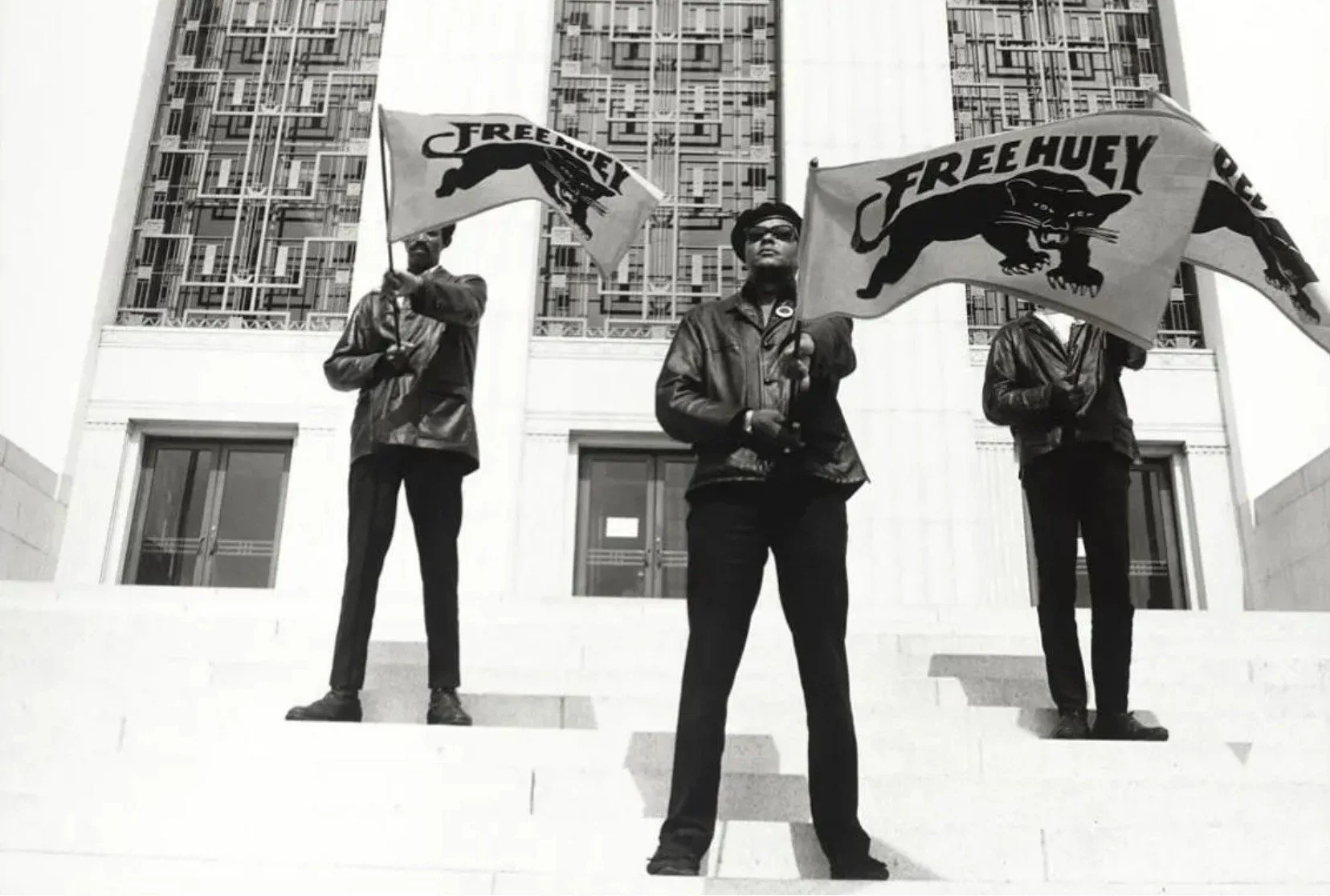
Source: Smithsonian National Museum of African American History and Culture
From confronting politicians to challenging policemen, the BBP protected Black citizens against brutality in their communities. As medical centers rejected Black patients or gave segregated care, the BBP used self-care as a means to advocate for their communities.
Local chapters of the Panthers were often led by women, focusing on community efforts through their “survival programs.” These programs included free breakfasts for 20,000 children each day as well as a free food program for the elderly and families in need. From sponsoring schools and distributing clothing to providing transportation and sickle-cell testing, these programs provided the structure and support needed for low-income communities.
The Black Panther Party was a trailblazer for promoting self-care and wellness in times of tribulation. Angela Davis and Ericka Huggins, former leaders in the BBP used yoga and meditation while incarcerated to promote mindfulness and movement. Following their release, they both advocated for proper nutrition and physical movement for an individual’s mental health, especially while navigating an inequitable and sociopolitical system. Both Davis and Huggins created wellness programs for adults and children in recreational centers nationwide, including Brooklyn, New York, and Oakland, California, where low-income communities may have limited accessibility to wellness (Houseworth, 2021).
The fight for self-care continues through the 1980’s with writer Audre Lorde noting the intersectionality of self-care and civil rights. Lorde frames self-care not as self-indulgence but as an act of political warfare and survival. In her book, A Burst of Light: and Other Essays, Lorde emphasizes that nurturing oneself is necessary. While this book focuses on the self, radical self-care is also emphasized through community survival, because to care for the community, you must care for yourself.
According to the Global Wellness Institute, the global wellness economy reached a record $6.8 trillion and is forecasted to reach $9.8 trillion by 2029. Doubling since 2013, the wellness market has exceeded significantly in profit.
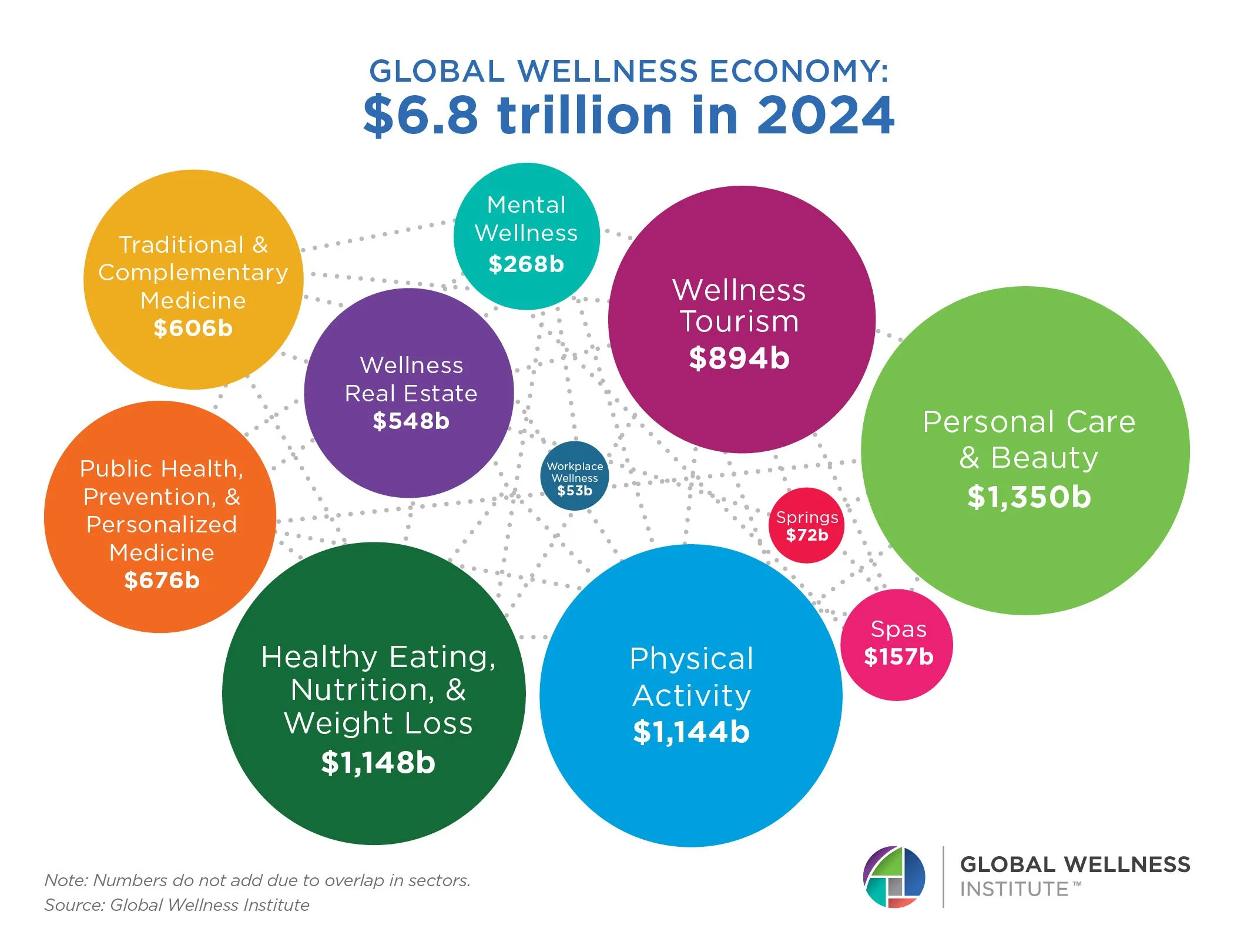
Source: Global Wellness Institute
As the industry continues to evolve, we see the self-care and wellness industry evolve on our feeds, with beauty brands such as Rhode dominating the wellness space with beauty products such as moisturizers and toners to peptide lip tints and pimple patches.
Rhode’s recent collab with the Bieber’s, Hailey and Justin Bieber, showcases a line of limited edition products, including spotwear, pimple patches, a caramelized banana lip tint, and yellow and brown eye patches. As the collection sparks excitement from Bieber fans and Coachella go-ers, the launch provides a glimpse of how self-care is repackaged and sold to us.
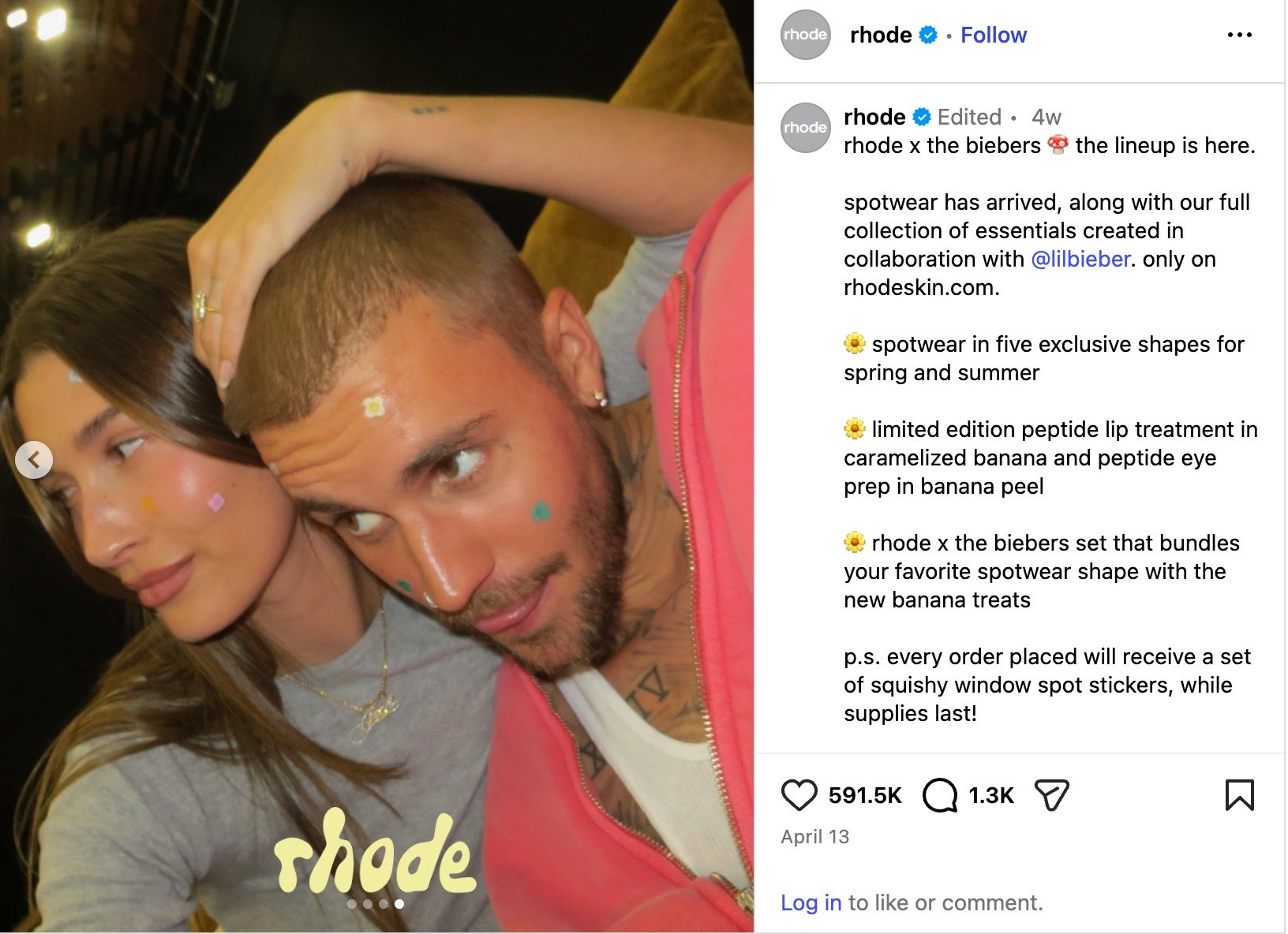
Source: Instagram
Beyond skincare and beauty, the wellness industry continues to reshape what self-care means through the whitewashing of wellness practices born in Black and Brown communities. Yoga has been a profound practice that originated in India, as a system for mental, physical, and spiritual development that has been used for centuries. From South Asian spiritual practice to boutique fitness studios primarily attended by white women, the evolving landscape of yoga practice in the United States mirrors how self-care is commodified as a product to consume, leaving underserved communities out of the picture.
According to Yoga Alliance, 71% of yoga practitioners and 88% percent of yoga teachers are white in the U.S. Yoga has the potential to benefit anyone who practices, but the way yoga is portrayed and found in the community strengthens the barrier for underserved communities, which is the opposite of what the leaders during the Civil Rights Movement strived to dismantle.
In 2025, a study from Washington University School of Medicine found that after mapping over 500 major chain yoga studios across the U.S, fewer than 10% of studios were located in areas where Black residents make up more than 13% of the population. Fewer than 25% of studios were in areas where household incomes were below the 2022 national median of $74,580. On average, studios were concentrated in areas with the highest Black-White economic segregation, clustering in the wealthiest, most racially segregated white neighborhoods.
By taking traditional practices from marginalized communities, stripping the context, the wellness industry sells them back at a premium that only those with available income can afford. When wellness became an industry, it didn’t just gain a price tag, but a face of those who benefit from it while actively pricing out the communities that built it.
While self-care now is seen as aesthetic or consumption, self-care was meant for a daily discipline for survival. With civil rights activists fighting for the rights of the Black community, the self-care routine was the resistance, showing up through meditation before a march, yoga in prison cells, and free clinics for the community. Now, the routine is content, “what I eat in a day” videos, Instagram stories with a link, and “self-care” days featuring overpriced yoga and smoothies.
Hailey Bieber isn’t just selling a lip tint, but an identity of wellness, one that requires disposable income. When self-care becomes something you perform rather than something you practice, whose version of wellness are you actually practicing?
The racial wealth gap in wellness continues through organic groceries and boutique fitness models that cater to predominantly white, wealthy communities. With stores like Erewhon and Whole Foods that are geographically inaccessible to most working-class and low-income
communities. Boutique fitness models such as Pilates, Barre, and Cycle studios are priced to make fitness a luxury, with monthly memberships that often cost more than a low-income family’s grocery budget.
“To enact meaningful change in the wellness industry, professionals need to openly acknowledge that the wellness industry perpetuates the false narrative that wellness is for white people,” states Tonia Callender, featured in the Global Wellness Summit.
Self-care and wellness can be practiced without the price tag. Communities are actively pushing back with grassroots wellness collectives, community fridges, free yoga in public parks, and networks to provide accessible care. These all echo the Black Panther Party’s survival program model, providing accessible self and community care to those who need it most.
Self-care at its most radical isn’t a product, but a practice. A practice that starts with reclaiming its roots and realizing that we can care for ourselves and others without the price tag.
The matching sets, red-light masks, and $45 classes aren’t going anywhere. But the next time you need self-care, remember that the products sold to you are designed to keep you constantly consuming.
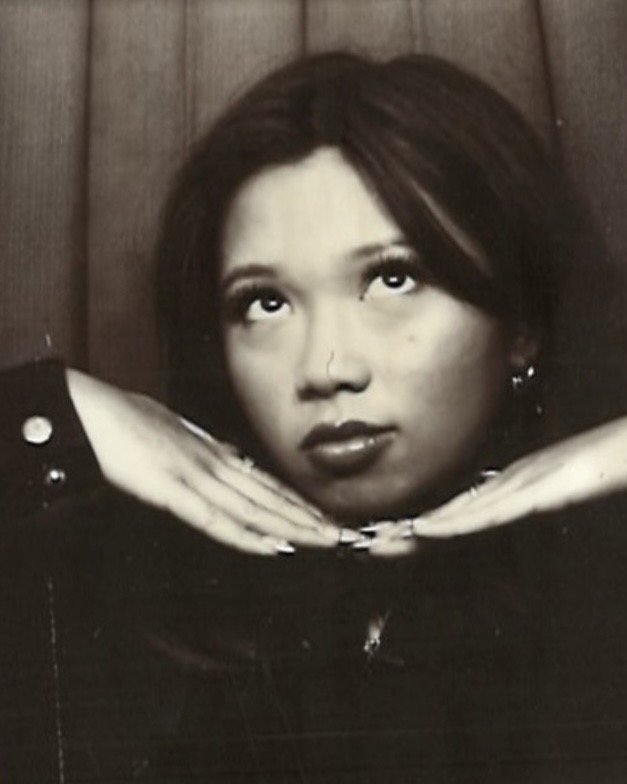
Malina Siharath is a junior majoring in public relations and minoring in sociology at the
University of Oregon. Other than writing, Malina enjoys pilates, singing, and making matcha for
her friends.
You can find Malina on Instagram at @malinapham playing influencer on social media or
@malsmatcha, her matcha pop-up project where she creates curated events and awesome