
Acid Jazz is a genre of music that you may or may have not heard of. This is because the use of the musical term was short lived, but there was once a time where the words “acid jazz” encompassed an entire subgenre of music. Acid Jazz was a type of music that was composed of all of the traditional jazz elements – like horn sections and the use of seventh and ninth chords – but also brought in inspiration from other sounds, such as rare groove sampling, input from hip-hip and funk, and disco and house influence.
Origins
According to Masterclass in their Acid Jazz Music Guide:
“The term ‘acid jazz,’ first used by French-English DJ Gilles Peterson, is a play on "acid house," a popular mid-80s dance genre. In 1988, along with fellow DJ Eddie Piller, he formed Acid Jazz Records, which showcased dance artists that sampled obscure records from the mid-century jazz scene. Such seeking out of obscure samples is known as rare groove sampling. The label's Totally Wired compilation helped set the template for acid jazz to come.”
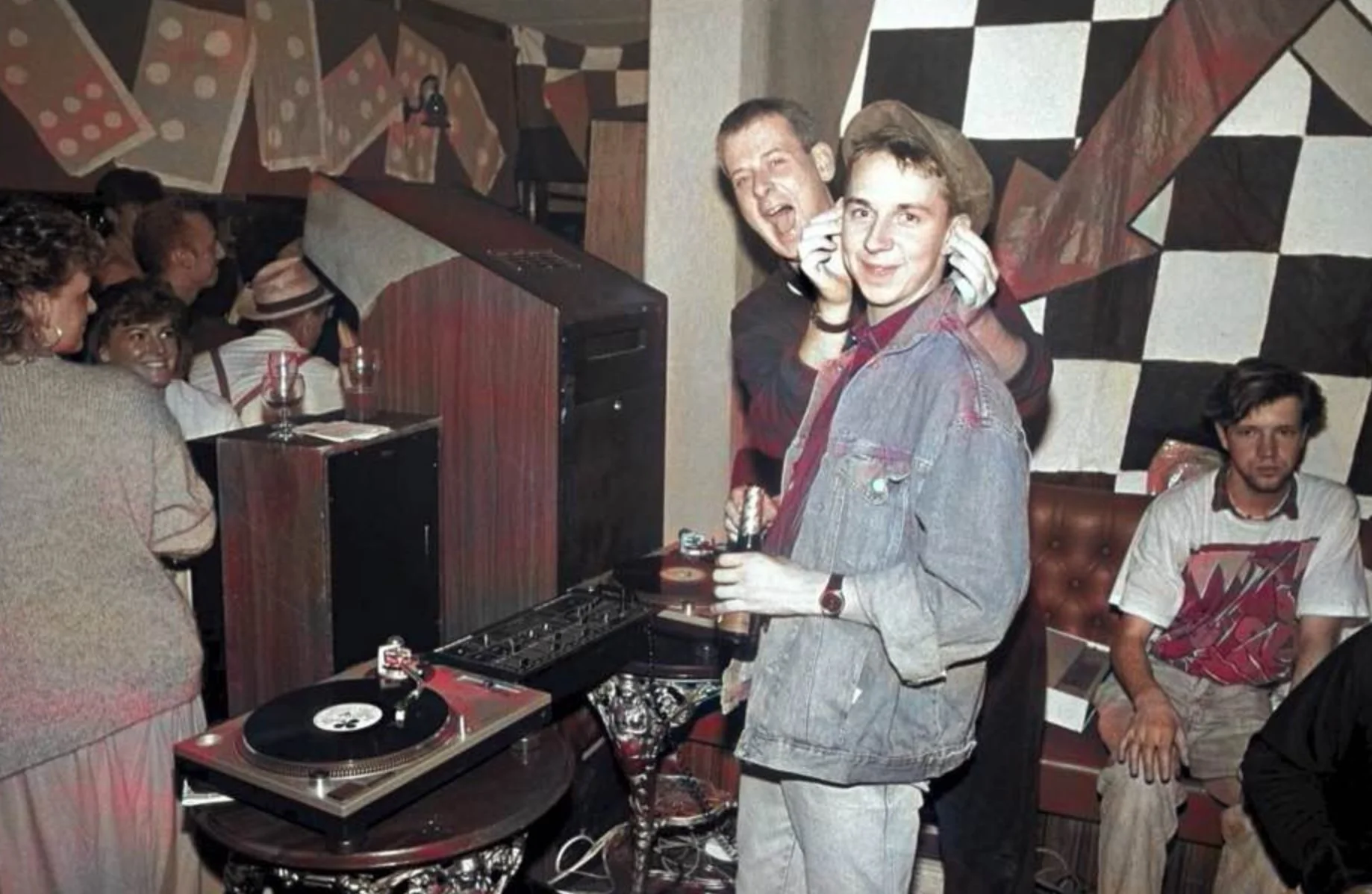
Gilles Peterson and Chris Bangs
In order to get to the definition of Acid Jazz, we must define acid house first. Acid house is a genre that began in Chicago, characterized by use of the Roland TB-303 Bass Line synthesizer, four-on-the-floor beat, and a range of 120-130 bpm. This genre is strongly associated with raves, clubbing, and club drug culture. In an interview for Music Week titled: “All that Acid Jazz: Eddie Piller looks back on 25 years of his genre-defining label” the interviewer asks Piller about the intentions behind the creation of the label Acid Jazz. To answer the question, Piller says,
“The whole thing started as a bit of a joke. I was managing a band called The James Taylor Quartet, who had just been signed to Polydor and I was mates with Gilles Peterson. We saw our scene--the rare groove and jazz scene, for want of a better word--growing over a year-long period.
Then Acid House came along. We were on this holiday in Ibiza where it was discovered by the British DJ fraternity. We thought it'd be good to get the atmosphere and excitement of Acid House into our jazz scene. So we decided to set up a label.”

Eddie Piller
A traditional element of jazz that acid jazz did not take on was the frequent inclusion of improvisation and melodic soloing. This aspect of acid jazz made people question whether it was a genre that could be considered to belong in the realm of jazz and was also part of why people struggled with what was considered acid jazz and what was not.
In 1990, Peterson decided that he wanted to move on from Acid Jazz Records and start a new record label. He named it Talkin’ Loud. When Peterson and Piller creatively split, they divided their artists between themselves. Peterson left with Galliano and The Young Disciples, and Pillar stuck with The Brand New Heavies and Leftfield. Piller continued with Acid Jazz records and signed artists like the James Taylor Quartet and Jamiroquai. While he was dedicated to the ease and relaxed nature of a small record label, Piller did not predict the booming success of Jamiroquai. He knew that this was the risk of not working with a major.
“That's what we did with Jamiroquai. He was too big for Acid Jazz in terms of his attitude, outlook and expenditure in terms of what he wanted to do. We knew that we would never be able to pay the costs. His first single cost me 45,000 £ to record, whereas the first Brand New Heavies album, which sold a million, cost 7,000 £ to record.”
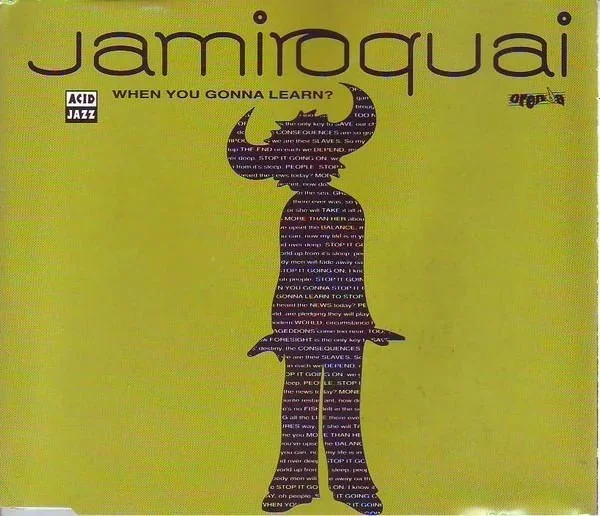
“When you Gonna Learn” released by Acid Jazz Records
After a year of being signed to Acid Jazz Records, Jamiorquai made the switch to Sony Music in 1993, where he continued creating the sounds of acid jazz.
Global Spread of Acid Jazz
By 1994 Acid Jazz had begun to move from subcultures and into the mainstream with releases like Jamiroquai’s "The Return Of The Space Cowboy." Fans around the globe started to move and groove to the funky tunes of Acid Jazz.
While some people were very open and receptive to the term and genre, others were confused about its emergence. In an article put out by Billboard titled: “Goin' global: the explosion of acid jazz: EastWest's heavies, Capitol's US3 reach beyond core fans at retail” readers can observe the two sides of the spectrum. Positively Peggy Dold, VP of marketing at Island Independent Labels says,
"You can't define acid jazz with one particular record or artist. There are nuances and differences in the music, which is very healthy."
But there were also obvious qualms that others had, feeling that the term was limiting. Mintos, front man and composer for Talkin Loud/London act Urban Species says,
"I feel uncomfortable with the phrase because I connect it so closely with the label in London. I prefer to think of what we do as combining poetry with an eclectic range of music. Sometimes we get real hard and funky. Other times, we're much more ambient and soulful. It's never the same vibe."
This is likely why acid jazz didn’t stick around as a defining term. The genre itself was loose and indefinite which made it difficult to use the term correctly. It eventually ended up just blending into other genres, fading away into the musical scene and remaining in the musical past.
Acid Jazz in Japan
As acid jazz spread across the globe, it made its way to the clubs of Japan. In Japan, the sounds of acid jazz were not being played all over the country. It was in niche and cultivated environments that the sound blossomed. The version of acid jazz that became popular in Japan didn’t take any inspiration or influence from Japanese music, instead embracing the musical and cultural differences the genre provided to the Japanese club scene. In an article for Billboard titled “Japan’s Cool Cat’s,” a popular Japanese acid jazz group, United Future Organization’s Toshio Matsuura is interviewed on his view of acid jazz.
Interviewer:
“So is this jazz or what?”
Matsuura:
"It's not real jazz--it's dance music with a taste of jazz," says one Tokyo club-scene habitue.
"Because Japanese people are interested in categorizing everything, artists call their music 'acid jazz' so the media has a convenient label."
“I'm not really sure what the term means. The music is more like '70s crossover or fusion."
Specific clubs in Tokyo like Yellow, Mix, Wanna Dance, Jirocho Bar, M.C. 1000, and Club Quattro would have acid jazz nights, places where Galliano and Gilles Peterson would often visit to indulge in familiar sounds, in a new place.
The Future of Acid Jazz
Although acid jazz is not a term or genre that is often referenced today, the legacy left a lasting impact on the world of music. Without the label, the world may have missed out on a whole area of music that was yet to be discovered and defined. Acid jazz groups are still putting out music today, but not very many of them are using the term “acid jazz” to define their music anymore. Despite this, Acid Jazz Records still exists today and is still signing musical groups.
Sources:
https://musicrepublicmagazine.com/2023/02/acid-jazz-anyone/
https://www.reddit.com/r/jamiroquai/comments/1hs0ksw/talking_about_single_releases_1_when_you_gonna/
https://www.vintagerockmag.com/2022/01/eddie-piller-returns-to-the-roots-of-mod/
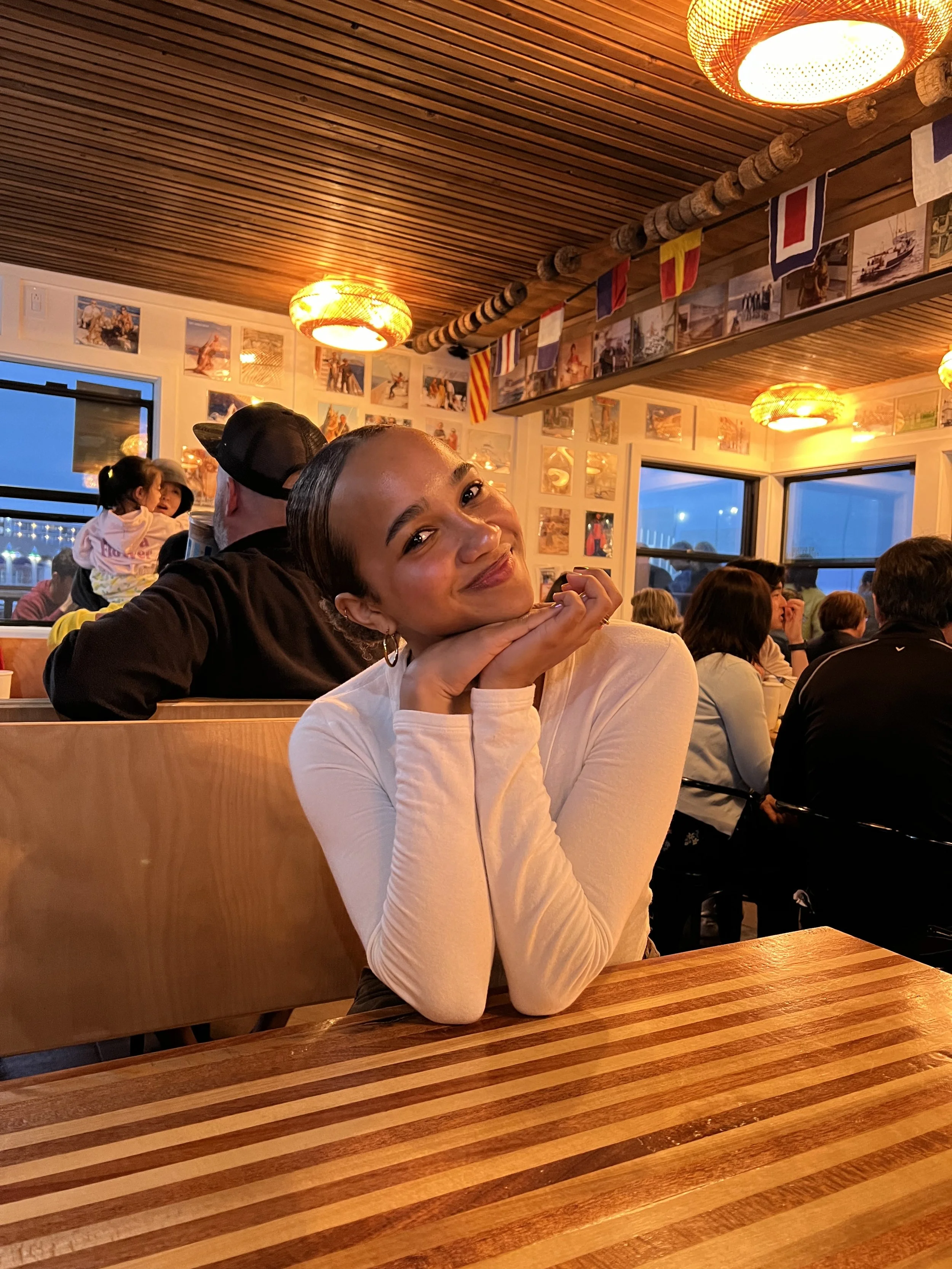
About the Author
Nahla Wilson is a senior majoring in English with a minor in digital humanities. Her hometown is Austin, Texas. In her free time she enjoys hiking, watercolor, trying new food, and finding any excuse to dress up!