
The Language of Stickers
Walking through my college campus, you will see stickers layered on water bottles, laptops, street signs, phones, etc. They appear everywhere once you start noticing them. Stickers might seem small or disposable, but they reveal a lot about the people who use them. Even something that costs a few dollars or something you get with a purchase can end up carrying a surprising amount of meaning. Stickers are a form of personal storytelling.
Looking across laptops in my class, I can see someone’s favorite artist, favorite store, or favorite city, all through the stickers they put on their belongings. Sometimes it only takes one or two to immediately understand what someone is into. But each sticker says something different, and they function as tiny displays of identity. They turn ordinary objects into small canvases for self-expression. Stickers feel more personal than other forms of decoration because they are tied to specific moments, places, or communities. A sticker might remind someone of a trip, a concert, or just a random place they stopped into once and liked.
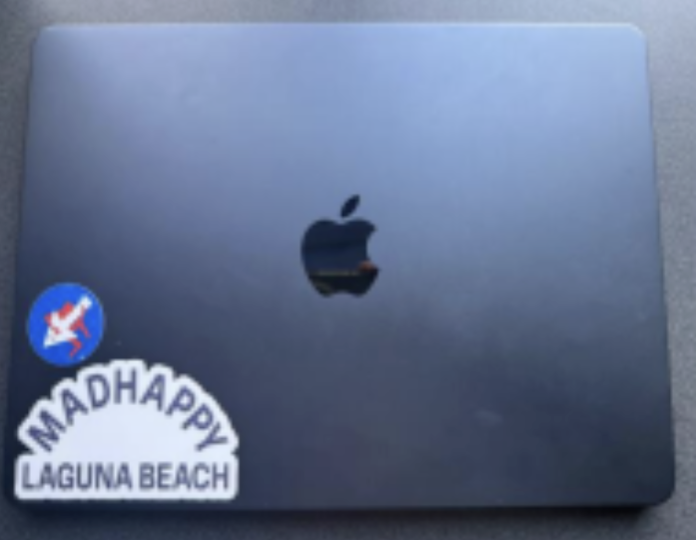
On my laptop, I chose to decorate it with only 2 stickers. My collection restarted when I got a new computer. It felt like a blank slate. I have a sticker from Madhappy from Laguna Beach that I got when I bought a hoodie. It reminds me of being back home and all the things I love to do when I’m there. The other sticker is a street sign turned into a guitarist that my neighbor got me from Italy, which was done by Clet Abraham. It has a small design but it stands out on my laptop. On my water bottle I have another Madhappy sticker, one from a surf shop near my hometown, and some stickers that came with swim trunks that I bought.
Specific to UO, the stickers I see on campus are used more commonly to express groups on campus. From Greek letters to club handouts, stickers are a way for people to advertise their groups along with their interests. Each sticker came from a different moment, which makes the bottle feel like a collection of small memories. What makes stickers so interesting to me is that they feel like a project that never gets finished. There is always space for another person. It is a never-ending accumulation.
This is what makes stickers feel cool. They slowly build character over time. They grow over time, layer over each other, and change with the person who owns them. What is interesting is that there is no universal way to use stickers. Some people carefully place just one or two, while others cover every inch of space. Every approach feels like a way to communicate personality through placement. Over time, a sticker-covered object becomes a kind of archive. It starts to reflect where someone has been and what they care about. A laptop might hold the remnants of past interests, concerts, or phases. Stickers remain refreshingly messy, and they let people claim space in their own way. In a small and straightforward way, they turn everyday objects into something completely personal.
About the author: Kellen Cox is a 1st year student at the University of Oregon studying advertising and public relations. Kellen likes to write about pop culture, the media, or whatever he’s currently interested in.
LinkedIn: www.linkedin.com/in/kellencox40812