
Your body is the least interesting thing about you. But some advertising corporations don't want you to know that.
I’m not sure exactly when it was that I realized the women in the media I was consuming didn’t look like the women in my life. All the women in the commercials I saw had perfectly clear skin, impossibly thin bodies, constant smiles, and no cellulite or body hair of any kind. But I knew my best friend didn’t have perfect skin, my aunt didn’t weigh 100 pounds, and my mom didn’t smile constantly. Yet I thought they were objectively beautiful and successful. These women were beautiful to me. For some reason, I wasn’t always easily able to apply the same generosity to myself.
I have since come to realize the incredible prevalence of sexualization of women in advertising. Since the mid-twentieth century, the oversexualization of women has remained a popular tactic for advertising agencies to grab the attention of their audiences. Brands like Burger King, American Apparel, Mercedes, and Budweiser plaster half naked, overly photoshopped women on posters, perpetuating unrealistic body standards for women to absorb all over America. These images produce a narrative of what it means to be a woman in America: the sexualized you is the celebrated you. The consequences of this are striking in both women and men.

Credit: Research Gate
For one, sexualized advertising explicitly links the female body to capitalism. It suggests that sexualized bodies directly equate to profit. Consider the Burger King advertisement above. Don’t you just love giving a blow job to a burger? No? Are you sure? It is a “super seven incher!” Surely, no woman could resist that. And who is benefiting from this profit? The white, old men who own big-business corporations. Definitely not the woman on the poster. Not only does this image cater to men by suggesting their sexual desires, but it significantly demeans women in a context the public considers casual.
Furthermore, as little girls are developing their sense of selves, they are forced to repeatedly compare themselves to the unreasonable depictions of women in television, magazines, and other media. The most dangerous aspect of this is that it affects girls subconsciously. As time goes by, young women are socialized by the images they see on a day-to-day basis. Their role models become fake, touched-up versions of superstars, and without realizing it, they begin to believe they need to look like those women to succeed.
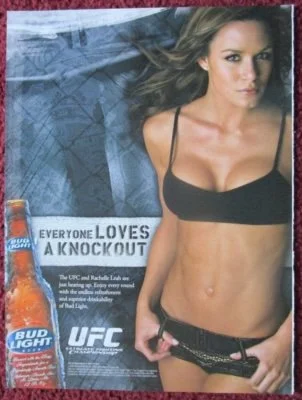
In many women’s minds, their worth is inextricably linked to how closely their bodies imitate the hottest new body standard. That is—the hottest new impossible beauty standard. Advertising produces these images with the intent to capture their audience’s attention. Through certain advertising, women’s bodies have been used as vessels to target male interest, create the “wow factor,” and fund capitalist industries. The poster below was a common advertisement for Bud Light in the early 2000s. The play on the word “knockout” points to intoxication AND sex.
Double points for you, Bud Light.
Credit: Ebay
Credit: UBC Blogs
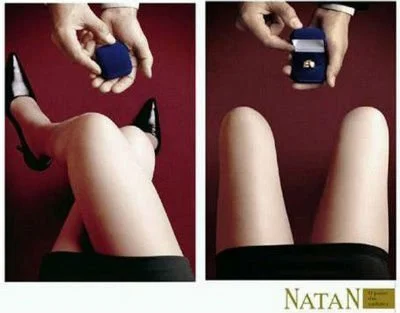
Not only does the sexualization of women affect women themselves, but it also distorts the ideas that men have about women. The Natan Diamonds advertisement above suggests – literally – that a woman will open her legs to a man when he presents her with a shiny new ring. This image evokes ideas about marriage, gender, and sex standards that degrade women for the purpose of financial gain. When asked about his personal opinion about such advertising, a man might say, “Of course I wouldn’t objectify a woman like that.” But I would argue that the danger happens subconsciously.
Even without knowing it, men are walking through life consuming media that celebrates women’s humiliation for the “greater good” of their benefit. This is not to say men are evil here. The advertising is what breeds this tolerance for the objectification of women. It is the sexist advertising that weaves this misogyny into the fabric of our daily lives. I think men and women, together, can choose to be more intentional about recognizing the frequency of such content. Where are you seeing these ads? Are you drawn to them for a reason? Do you purchase products from the companies that produce an outpour of sexualized ads? I think even stopping for a moment to think about these realities can begin to deconstruct the danger of subconscious consumption.
Credit: Ebay
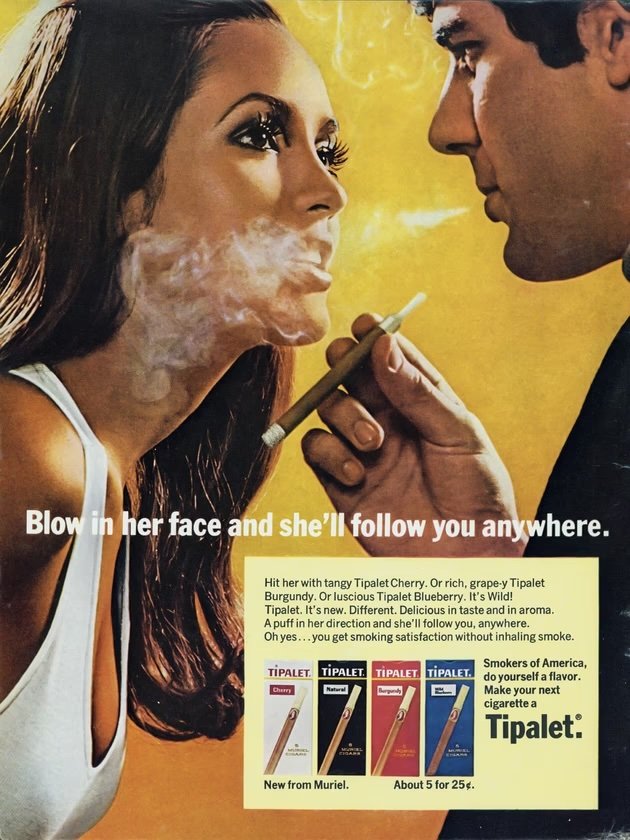
So, does sex actually sell? Some of the popular advertisements I have attached are remarkably offensive. Even ridiculous. Take a look at the Tipalet cigarette advertisement. Isn’t it just the hottest to have a man blow cigarette smoke all over your face? Not.
The over sexualization of women in advertising has gripped America for decades. However, I think we are entering a new age in which women are increasingly refusing to tolerate capitalism’s grasp on their bodies. Sexualized advertisements aren’t by any means necessary for a company to be successful.
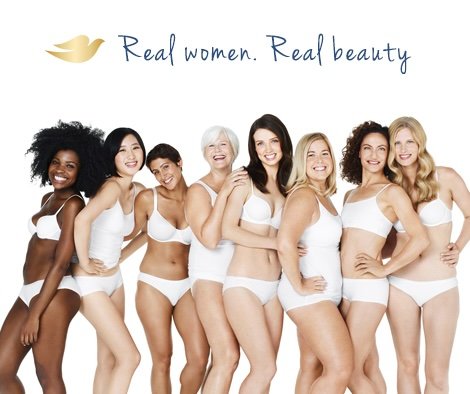
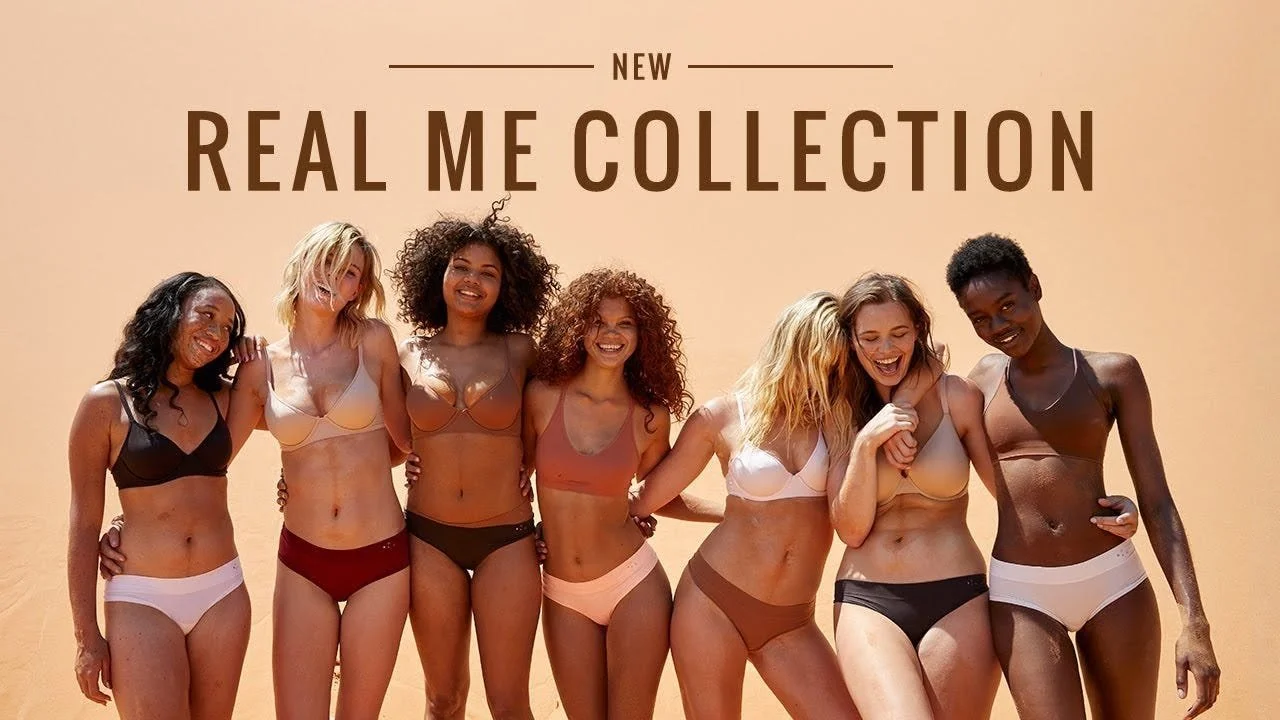
For instance, Dove’s Self Esteem Project has launched advertisements that celebrate women’s bodies and effectively increase product purchase rates. The 2015 Super Bowl featured the Always #LikeAGirl commercial that celebrated women as capable, intelligent, athletic people. Aerie has a body-positivity campaign called “Real Talk” that gives voices to models who are liberated from the process of re-touching in their photos.
The point is that sex doesn’t have to sell. Many brands are putting in the effort to make women feel seen. They want women to enjoy their products, not just sell them with their bodies. There is potential for the narrative to continue adjusting to new, more inclusive standards that make a difference for the self-esteem of young women growing up in America, and we should be here to talk about it.
So to reiterate – your body is beautiful, but so are you. In fact, it’s most likely the least interesting thing about you.
Credit: Dove
Credit: Aerie
Sources:
https://aef.com/classroom-resources/book-excerpts/erotic-history-advertising/
https://www.cnn.com/style/article/women-not-objects-madonna-badger-feat
https://edition.cnn.com/2015/07/22/living/seventies-sexist-ads
https://verilymag.com/culture/positive-advertising-womens-body-image-beauty-standards-dove-nike/
https://www.youtube.com/watch?v=joRjb5WOmbM
https://blogs.ubc.ca/valeriestobetskaiagrsj3002018culturejam/sample-page/
About the Author: Hannah Dean is a sophomore majoring in English and minoring in Dance at the University of Oregon. She is from the Big Island of Hawaii. She enjoys long conversations with her best friends, reading poetry she doesn’t understand, making bad photo art, camping, drinking ginger lemon honey tea, and laughing way too much while doing all those things.
You can find Hannah on Instagram at @hannahh.deannn if you want to see her bad photo art or reach out and be best friends!