
Food has long occupied a unique—and often contradictory—space in American culture. Historically, cooking as a career has been male-dominated, marked by aggression and high-stakes conditions; women have largely been excluded from professional kitchens and confined to home kitchens, expected to run them and provide for their families with only the tools at hand. They were limited to passed-down knowledge, strict budgets, and scarce ingredients. A restricted kitchen became not just an obstacle but a shared circumstance that created a need to share knowledge and adapt together— a shared language among bound roles, spoken through recipes bound in cookbooks. From the push for suffrage to the Americanization of foods, wartime roles, and the modern woman, cookbooks and, by proxy, the women who create and use them, have shaped the way the United States eats— a fact that permeates nearly every aspect of life.
One of the most influential early U.S. cookbooks was the Fannie Farmer Cookbook, published in 1896. The book included 1,850 recipes and is cited as the model for many modern-day recipes, with a header, an introduction, a list of ingredients and measurements, and step-by-step instructions. However simple, this structure mattered; the writing was meant to appeal to less-educated women, especially rural women, or serving women with limited access to education. Farmer’s cookbook also helped standardize cooking measurements in the United States, marking the start of a universal communication system for women to share amongst each other. With limited ways to communicate with one another, early cookbooks helped establish a code that was easy to decode and almost exclusively read by the housewife.
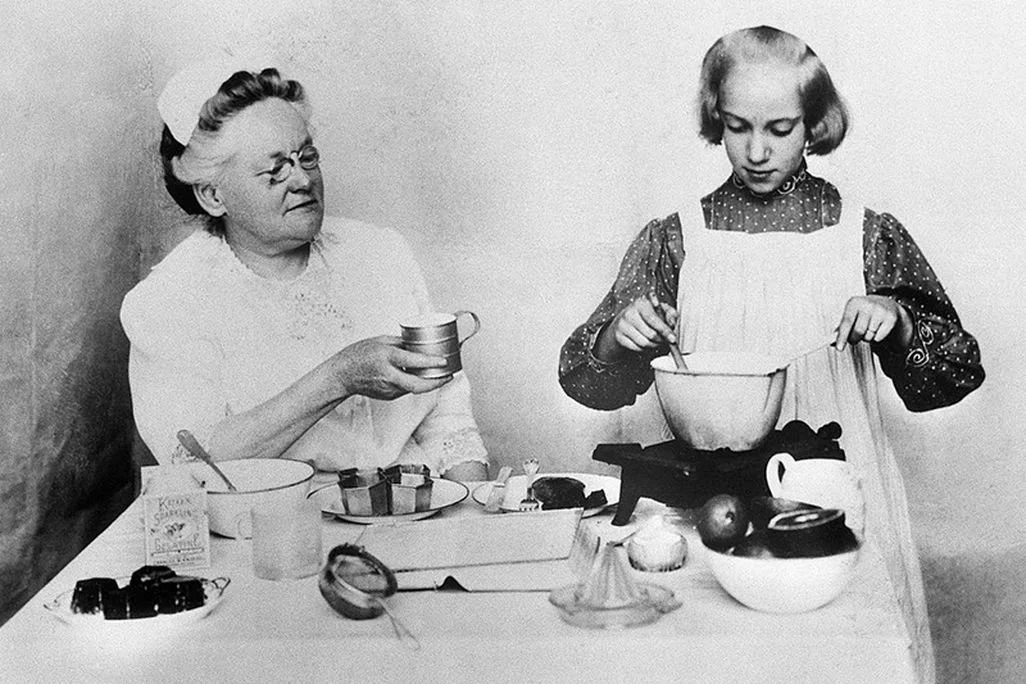
Fannie Farmer overseeing a young girl cooking in 1900.
As political change sparked, cooking and recipes followed suit. These recipes, ciphered in the language of domesticity, communicated the goals and strategies of these new political agents. The Suffragettes of the U.S. wrote cookbooks, including one aptly titled The Woman’s Suffrage Cookbook, which they believed would show that women could be both good women and good citizens. They proved this through stacks of recipes and kitchen skills that sat alongside their political literacy, arguing that voting would not take away their womanhood or the expectations that came with it. With recipes like “pie from a doubting husband” and “spaghetti a la suffragette,” the cookbook expressed not only the limits of society upon womanhood, an ever-extended “women belong in the kitchen,” but also the expression of agency and activism within the domestic space.
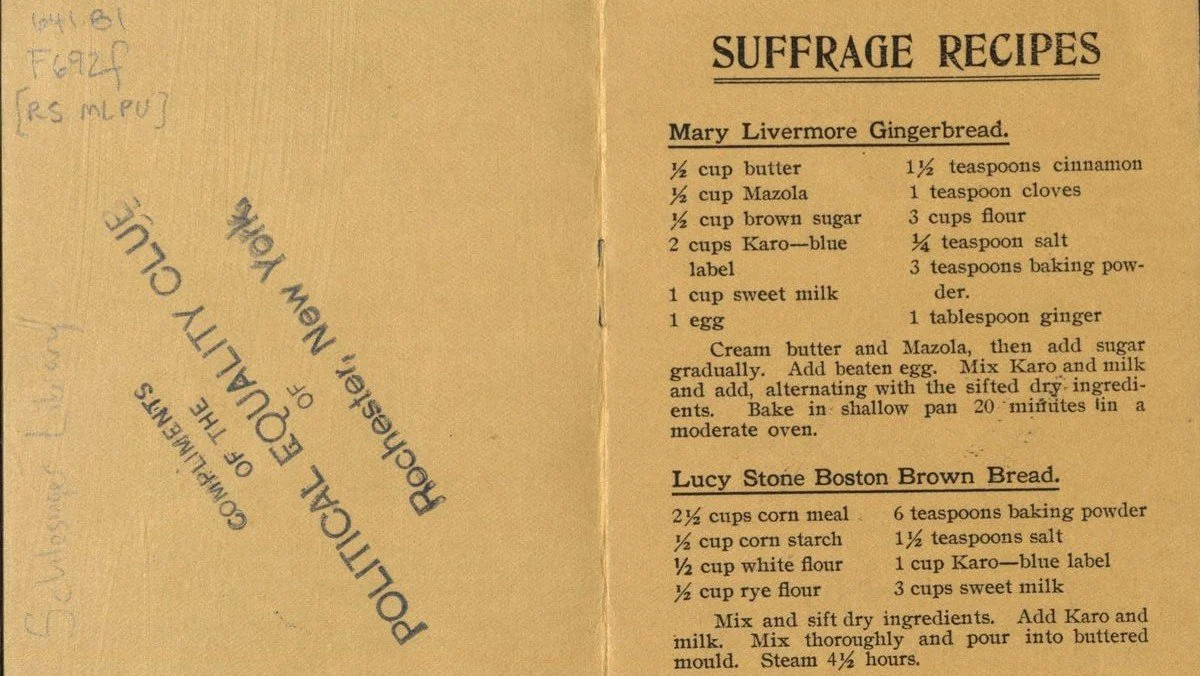
Karo Corn Syrup’s 1913 brochure appeals to women by marketing suffragette recipes.
Cookbooks also defined what foods, and therefore in many ways, what cultures, made it to the American lexicon of what was socially acceptable and what assimilated—what with time would become Americanized. The U.S. is a melting pot of cultures, and therefore so is food; there is almost no definition of an American meal, but rather many meal ideas that American culture and society have adapted. Which foods were absorbed depended on social understanding and location. For women, assimilation often took shape in Settlement Houses, a social movement that housed immigrants, provided community and job opportunities, and intended to build a broader American identity. The Settlement Cookbook, written by Lizzie Black Kander, shows this well, recording Americanized versions of European recipes and attempting to blend immigrants' familial and familiar cultures with an American identity.
Not all cultures received this treatment; xenophobia and racism often barred certain cultures based on a social understanding of the culture and peoples. This ostracism identifies not only the benefits of this feminine language found in cookbooks, but also the exclusionary nature they could promote. This speaks to the exclusion of so many women in the United States on a wider scale. These varying meals and identities have continued to shape how immigrant cultures and recipes are accepted into the American rolodex of recipes over time, and they continue to shape what cultures, foods, and identities are defined and accepted as American.
This sense of American identity through food became a major piece of advertising and propaganda directed at women and projected by women during World War II. In a time of full mobilization, women’s roles were adapting and were often emphasized as much as men’s. Women, too, were encouraged to do their part, in many ways, through food. During wartime, they still had families to feed; amid rationing and newfound employment for many, recipes became even more creative, and even more pointed. Working within a sense of patriotism, women’s use of food and the messages surrounding it became a part of the war effort. This included encouraging gardening practices known as Victory Gardens, along with widespread canning and skipping meats and grains.
Post-war times produced social anxiety about women’s roles,the family, and how to return to civilian life. This period of social change, especially around gender and labor roles, meant that cookbooks and advertising later emphasized a woman’s place in the kitchen and her obligation to her family. As women worked to reaffirm traditional standards amid anxiety, they were encouraged to leave any jobs they gained in wartime and return home to the kitchen and their families. This was a pattern that continued through the baby boom. This era emphasized creativity in the kitchen, as if to channel the newfound freedoms wartime brought, sparking odd food and advertising trends like the iconic Jell-O molds.
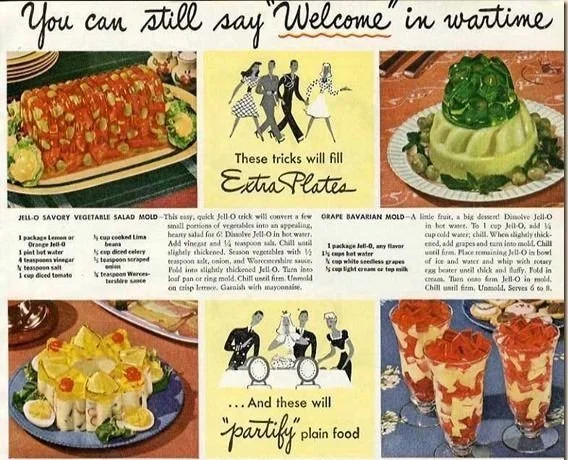
Jell-O became an iconic symbol of the housewife in many advertisements both during and after WWII.
This sense of women’s return to the home is reflected in modern discussions around food, aligning with the skyrocketing popularity of the “trad wives,” which positions a woman’s role as a domestic duty. The modern kitchen has adapted the cookbook, now including recipes shared online through TikTok and Pinterest, where women can advertise and monetize their domesticity from home, carving new windows in the walls of their patriarchal prisons. Cookbooks, like the suffragettes', speak to an evolution of American women’s rights and expressions of agency, whereas times like post-WW II speak to the opposite: an outcry from society, women included, to return to what is comfortable and known. Now follows the pattern of the latter: where there have been steps forward in places like women’s roles in professional kitchens and the idea of the working woman, today recipes and conversations around food take a step back to more conservative times, focusing on ideas of homesteading, motherhood, and dieting.
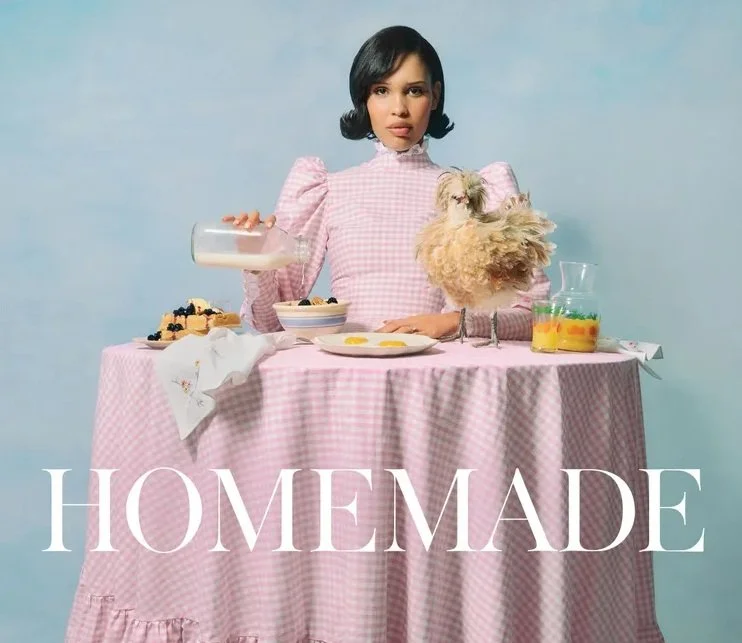
Influencer Nara Smith’s cover for her cookbook Homemade.
Women have long been expected to feed the bellies of Americans, and in doing so have shaped the culture of the United States. Cookbooks have served as a piece of shared language and a sphere of influence for women, adapted to share knowledge as widely as possible; the texts reflect more than the recipes within them. They tell women's stories, showing how they have challenged or continued the culture around them, speaking to their hopes for change or that they will stay within the bounds of expectations. Women have left an indelible mark on the American identity— one measured not only in meals, but in the stories and agency they have passed from kitchen to kitchen, through book to book.

About the author: Stella is a senior humanities major, with an art history and a classics civilizations minor. Her favorite revived characters include Jason Todd and The Vision, and she fantasizes about the revival of Ben Solo.
Sources:
Cover Image: The 100 Best Cookbooks: Vintage, Classic, and More
How 12 Female Cookbook Authors Changed the Way We Eat
The Forgotten Cookbooks That Fueled Women’s Suffrage - Gastro Obscura
Settlement movement - Wikipedia
Milwaukee pioneer introduced American life to immigrants through ‘The Settlement Cook Book’ - WPR
Food Rationing and Canning in World War II | National Women's History Museum
seriouseats.com-A-Social-History-of-Jell-O-Salad-The-Rise-and-Fall-of-an-American-Icon.pdf