
Over the past five weeks, I created a series of playlists exploring the relationship between music and painting. The artists I selected fall into what I think of as offbeat: those who push beyond the traditional boundaries to explore identity, politics, and nonconformity.
Keith Haring, “Unfinished Painting”
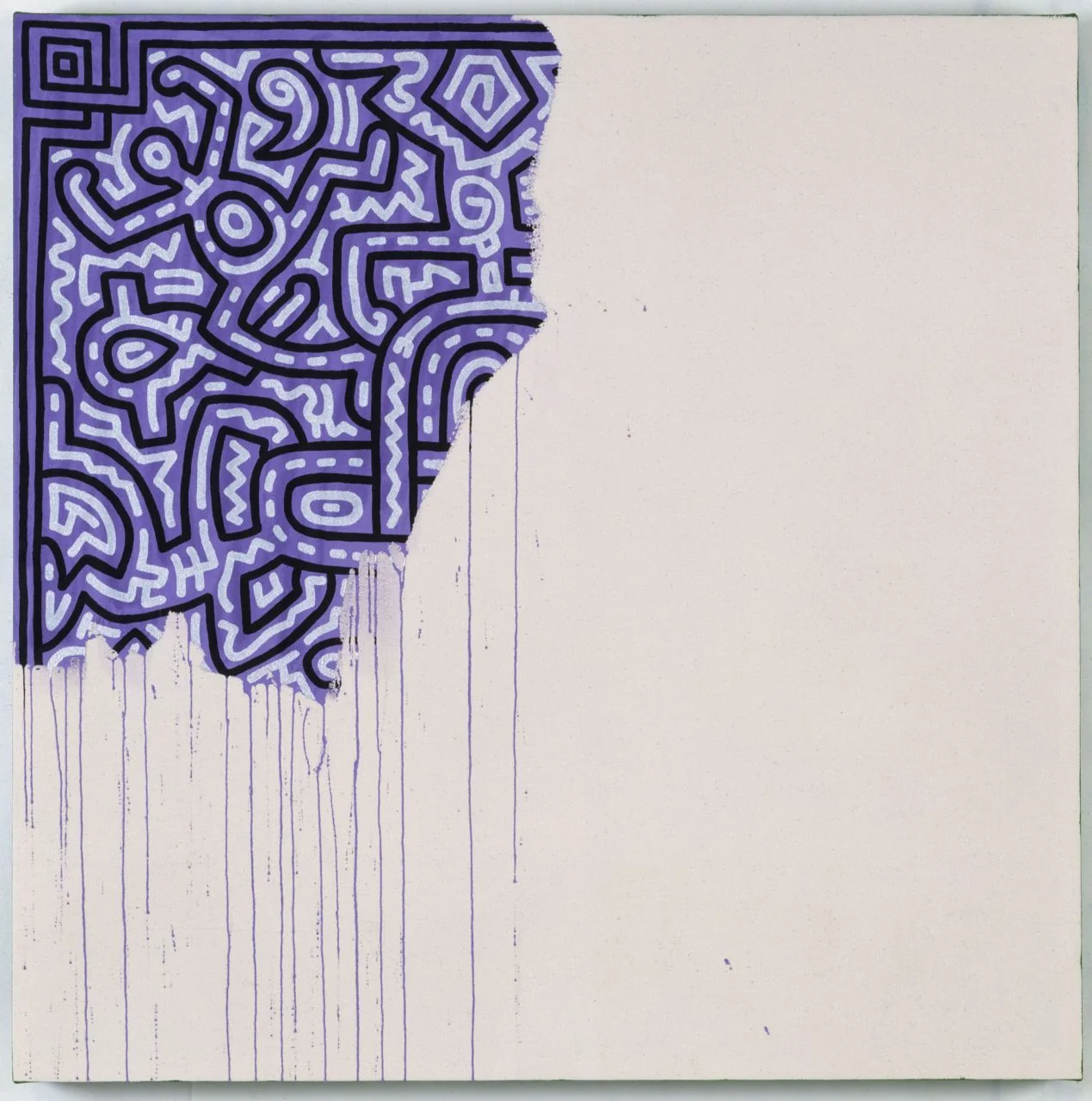
Unfinished Painting, 1989
There is no artist more representative of “offbeat” to me than Keith Haring, and this piece in particular has haunted me since the first time I saw it. It carries the weight of Haring’s legacy and the thousands of lives lost to AIDS while the government and society turned their heads the other way.
Much of Haring’s other work is bright and takes on a more playful tone, which makes this piece even more devastating. I wanted the playlist to hold this feeling of devastation: songs that speak about death, AIDS, losing loved ones, and the feeling of leaving too soon. I also intentionally included both queer artists and allies to reflect how the epidemic impacted so many people, regardless of identity.
John Madu, “Training Day”
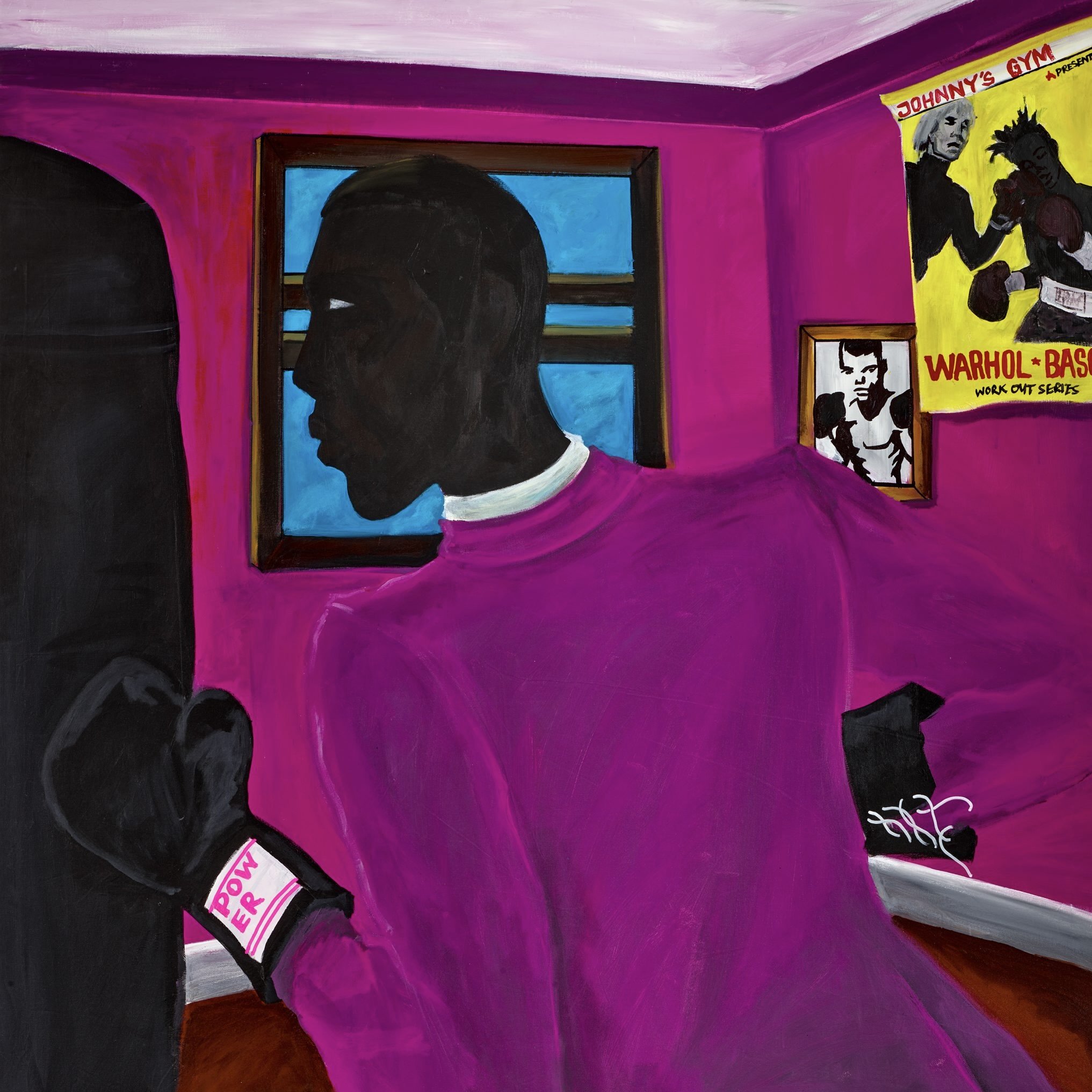
Training Day, 2021
For this playlist, I wanted to play with the sense of universality Madu explores in his work. In this painting, a poster advertising a boxing match between Basquiat and Warhol hangs in the room of a Nigerian man preparing for his own fight, which is why Ibibio Sound Machine’s “Basquiat” felt like the only possible song to start us off.
To me, this piece represents a two-way cultural exchange, with Western art filtering into Nigerian life, and Nigerian identity remolding these references. The playlist follows the same logic. I blended Nigerian hits from the ‘60s through ‘80s with Western-Nigerian artists, alongside some of the bands Warhol had his paws on that were themselves influenced by Afrobeat.
Altogether, it became a funky cultural mash-up, replicating the captivating layered identities and global references Madu captures on his canvases.
RF Alvarez, “After A Swim”
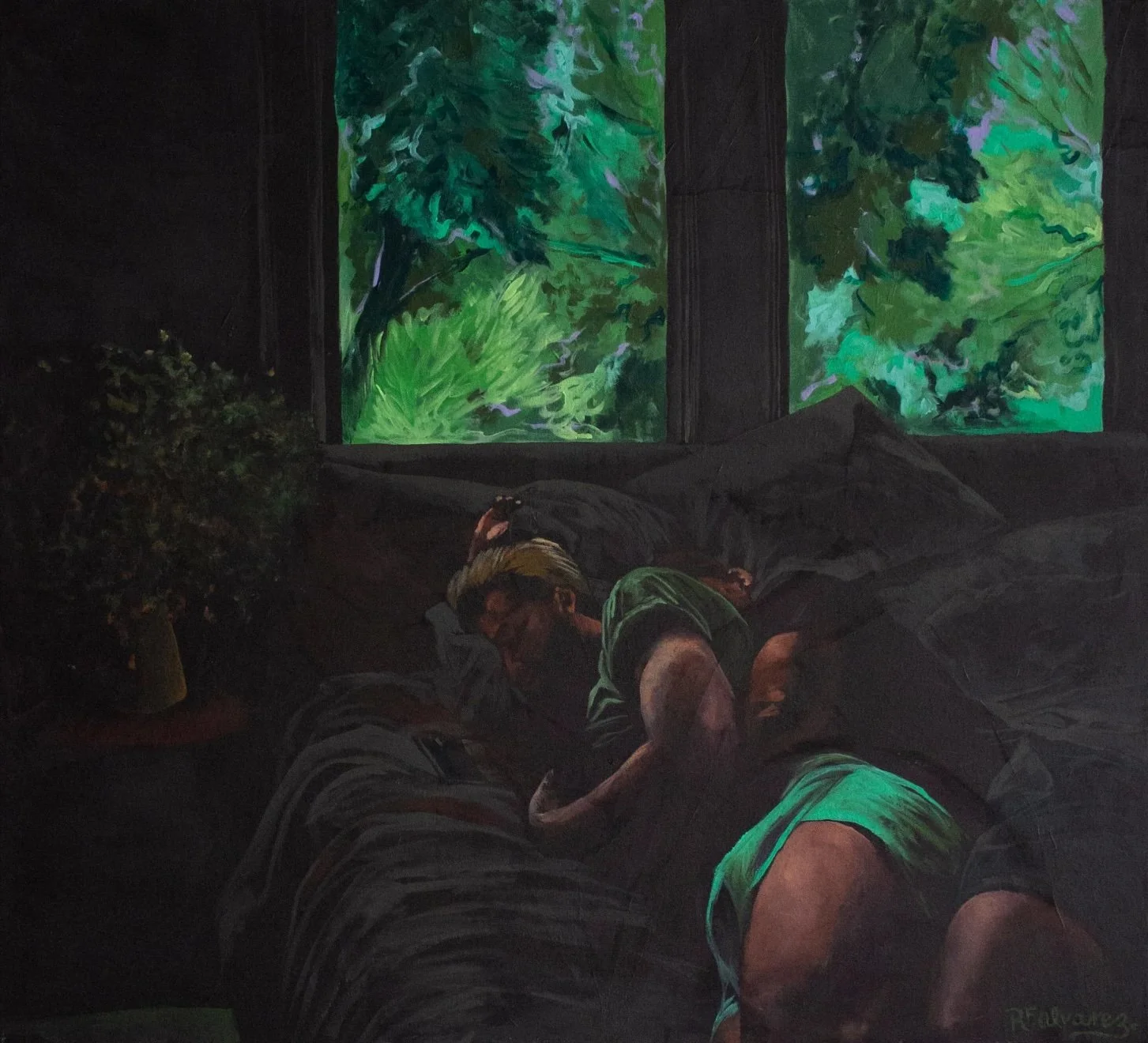
After A Swim, 2022
For this playlist, I wanted to get a little closer to home. RF. Alvarez is my favorite local artist from my hometown of Austin, Texas, and I knew I had to include him.
Alvarez’s work often centers queer experience, both from his personal life and historical readings. I’ve been particularly fascinated by his series of work depicting the home as a sanctuary for queer intimacy in the South. This piece shows him in bed with his husband, Chase, after a swim.
The comfort here is almost tragic in its intimacy. It reminds me of the classical songs that give me chills, songs about Texas, and the Spanish and Italian tracks that I can’t help but cry to. This mix might sound random, but it encapsulates the energy of Alvarez’s piece: the feeling of staying inside with the person you love, green light from the trees reflecting into the room, time suspended. You don’t want the moment to end, and that’s exactly why it’s painful.
Gabrielle Garland, “I don’t really like talking about my flair”
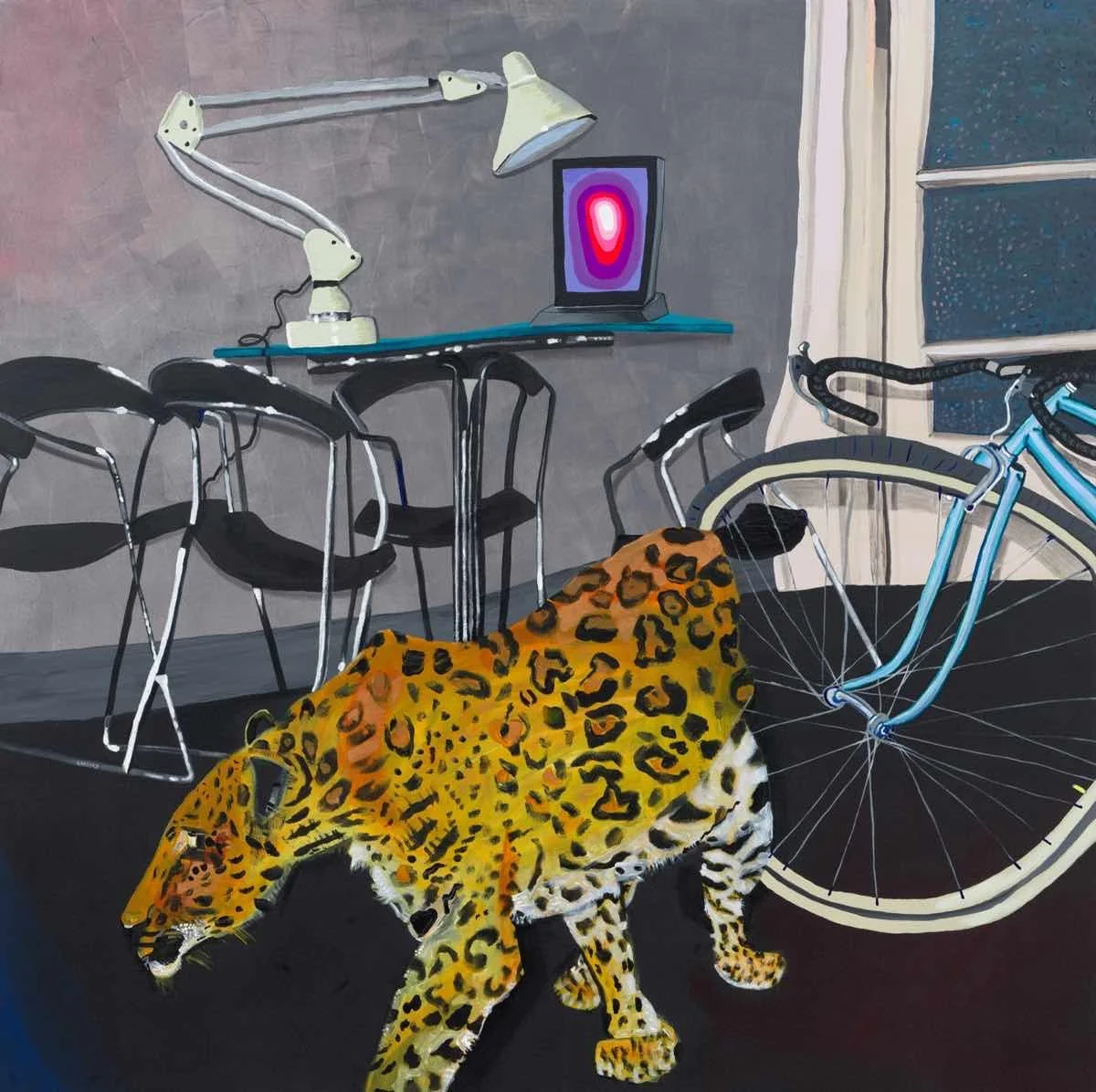
I don’t really like talking about my flair, 2024
I’ve been following Gabrielle for a few years, and I love how uneasy her paintings make me feel. Why is there a leopard in the house? What’s going on with the uneven metal chairs? Why is the lamp so oversized for that tiny desk?
Her piece taps into the fantastical feelings of childhood, so the playlist became a love letter to the music I listened to in the 2010s with my twin sister when we stayed up on our computers way past our bedtime, much to our parents' dismay. I also threw in a few songs from artists I’ve only recently discovered (shoutout Noporn), who capture the same disorienting feeling that this painting holds: atmospheric, concrete-echoing, with touches of neon bursts throughout.
David Wojnarowicz, “Savarin Coffee”
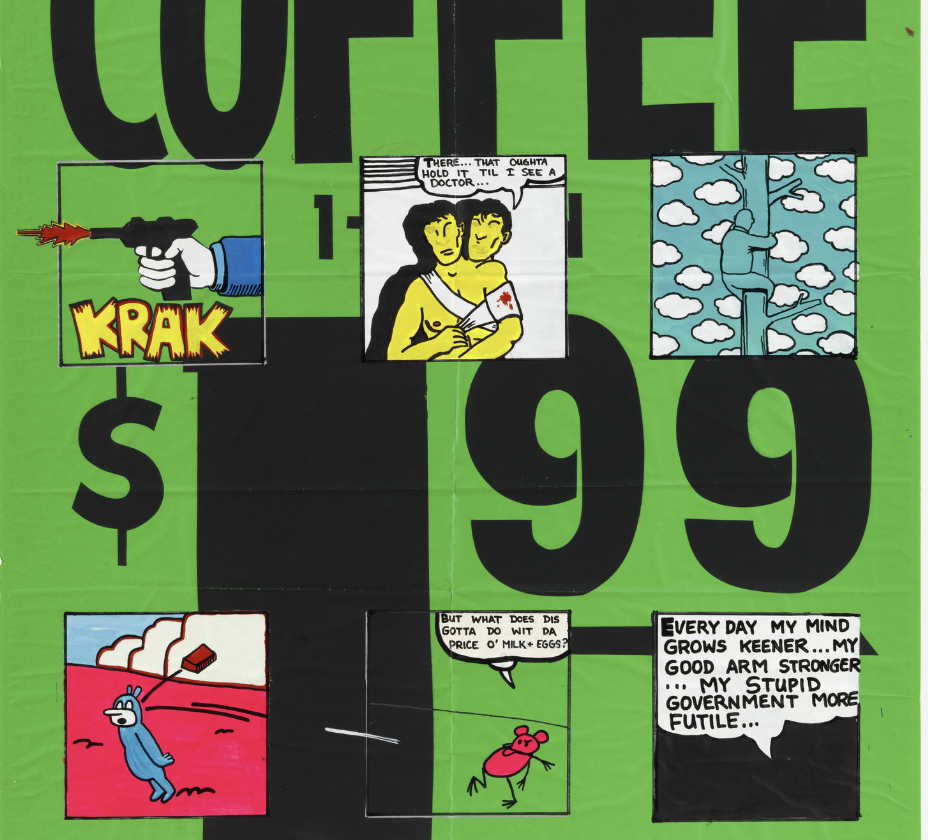
Savarin Coffee, 1983
I opened with Keith Haring, so it felt right to close with another essential American artist lost to AIDS. Rather than focusing on music that reflects his diagnosis, though, I wanted to channel Wojnarowicz’s weirdness. Whether in his paintings, photography, writing, or other creative projects, he refused to be contained.
Klaus Nomi was the first artist who came to mind. His music was visceral and uninviting, slightly perverse and intentionally alienating. From there, I followed the road toward the weirdos—the sex freaks, the voices who can only be described as grating, the lyrics that make absolutely no sense. While these songs may take a few listens to really appreciate, they were vital to developments in their respective genres. Just like Wojnarowicz, they insist on being heard.