Why Pop Girls Yearn for Wuthering Heights
Brontë's unexpected lineage
In 1847, author Emily Brontë scandalized Victorian society with a story so haunting and “unseemly” it was considered too filthy and obscene to be on the shelf. Because of her coarse and roguish language, harsh critique of political and social norms, and explicit imagery, Wuthering Heights didn’t gain a cultish following until after Brontë’s death.
The most fascinating thing about Wuthering Heights, however, is not the disturbing and toxic romance or the horrifically immoral characters, but how the story acts as a siren song to trailblazing women in experimental pop. As the novel washes down through generations, there’s a clear creative and sonic lineage forming between Brontë, then Kate Bush, and now, Charli XCX.
Catherine’s Ghost Is also a Pop Star
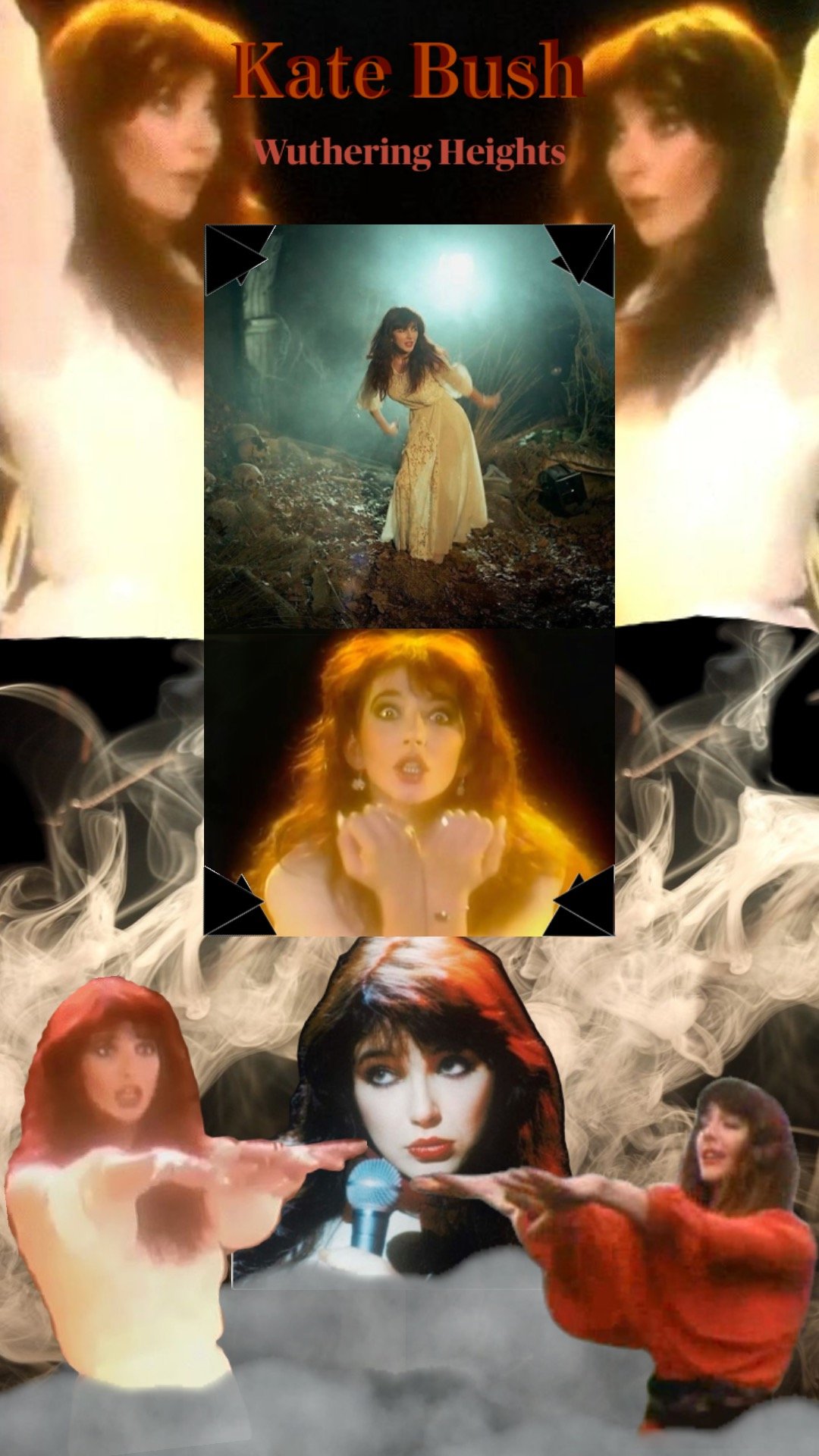
When Kate Bush released her song “Wuthering Heights” in 1978 (inspired after watching the 1967 BBC film adaptation), the entire vibe around Brontë’s story changed. Bush was only 18 when she wrote the song, inspired by Cathy’s perspective as a ghost haunting Heathcliff. Since Catherine doesn’t get a point of view and is a ghost for half the book, fans truly appreciated Bush’s artistic take.
Kate Bush had a potent and distinct style of electronic soundscapes and haunting vocals that was unusual for women of her time. Her music gives off an unconventional and unsettling energy that melds beautifully in the social, political, cultural contexts she chooses to use it, making her one of the most iconic artists of the late 70s and 80s. In contrasting hues of orange and red, Bush portrayed Cathy singing through the Wuthering Heights manor windows and dancing in the moors wearing a vibrant red dress. Everything about her campy pop take on the gruesome novel was spectacular and odd, and showed how an unconventional, sound-rebellious artist could take on classic fiction. It’s her release that propelled Wuthering Heights into a new kind of cultural afterlife.
Most importantly to note, Kate Bush wrote and released “Wuthering Heights” of her own accord. No commission. No prompting. She simply fell in love with the story and connected deeply to Cathy’s character.
Charli XCX Inherits the Manor
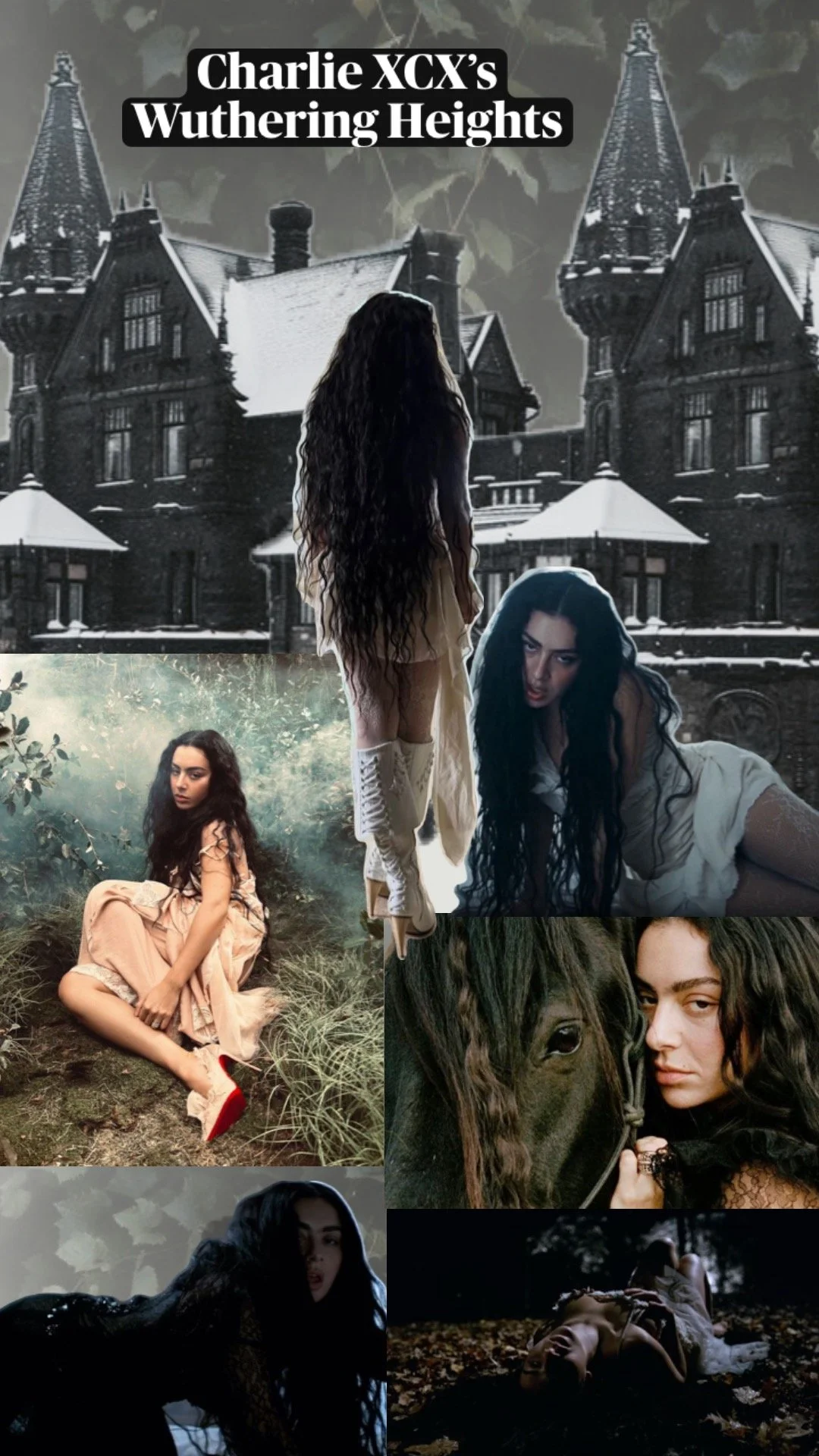
Fast forward to late 2024. Charli XCX is finishing up her BRAT era and looking for new projects when Emerald Fennell asks her to create a song for the 2026 Wuthering Heights adaptation. After reading the script, Charli is so moved she decides to create the entire movie soundtrack, completely pivoting from her BRAT sound and fully immersing herself in Brontë’s gothic, dark romantic world.
Charli approaches Brontë’s story with classic goth confidence and individual flair. Her music is full of dreamy electronic interludes and emotional vocals, ingesting Wuthering Heights and spilling it anew. When she released “Chains of Love,” the debut song from her Wuthering Heights project, speculation immediately followed about its resemblance to Kate Bush’s “Hounds of Love.” I love that the reference is obvious without being literal. It feels respectful and self-aware of the beloved world she’s stepping onto.
I’ve always seen similarities between Charli XCX and Kate Bush. Not just in looks, but in their use of synth and rebellious grunge within feminine pop and their electronic experimentation. It’s clear Charli XCX has been influenced by Bush’s work, but it begs the question: what is it about Wuthering Heights that entrances women generation after generation?
RIP Cathy, You Would’ve Loved Kate x Charli
The Brontë sisters are well known for Victorian literature that resonates with audiences, but Wuthering Heights is a clear black sheep among the Jane Eyres. Emily Brontë’s heroine rebels against restraint. She is wicked and selfish, raging against the elements with stark, raw emotion. Her feelings override what can safely exist in society, and so she truly becomes herself after death, where she is free. Heathcliff is a tormented soul, weaponizing his past, seeking vengeance, and most of all, yearning to consume Catherine. This is seen in the famous line, “You said I killed you- haunt me, then!” which summons ghost-Cathy as we know her.
I think the overall dust storm of Wuthering Heights: Brontë’s language, her morally grey heroine, villainous manor, and a vision of love so vengeful it consumes entire landscapes- is part of Bush and Charli’s inspiration. Most of all, however, I think they see themselves in Cathy. If emotion and untamed nature could coalesce into a single state of existence, you’d get Catherine Earnshaw. She is the moors. She is the wind. She’s a completely obscene, haunting ghost made only to torment a man whose disfigured, gruesome obsession ruins others’ lives, and his own.
Bush sang for Cathy, resonating with her attempts to claim Heathcliff’s soul, as well as her theatrical unwillingness to behave beyond the grave. On the other hand, if I had to describe Charli’s visual influence, it would be cunty ghost, with a sharp focus on the manor itself as symbol. Her work is messy, unpolished, and rebellious, painting the story through a modern-day lens, carrying Cathy and Heathcliff into the current day rather than trying to recreate them. My favorite part about the expansion of this story is that Charli XCX doesn’t poach Bush’s work. She nods to it when needed and diverges in all other aspects.
The “Haunting” Continues
As the rollout for the 2026 Wuthering Heights film continues, there are a ton of valid critiques about the casting, direction, aesthetic choices, and overall execution. Evaluating the creative decisions made on behalf of Brontë’s story is important, especially since they concern many of the sociopolitical critiques central to the original novel’s plot. With that in mind, I do believe we are incredibly lucky to experience the musical ripple of Brontë’s story in real time: a waterfall of female artists who resonate with complex, feeling heroines that rebel against social restraint. I find it lovely that Cathy’s ghost continues to “haunt” us decades down the line, inspiring art and music beyond the grave.