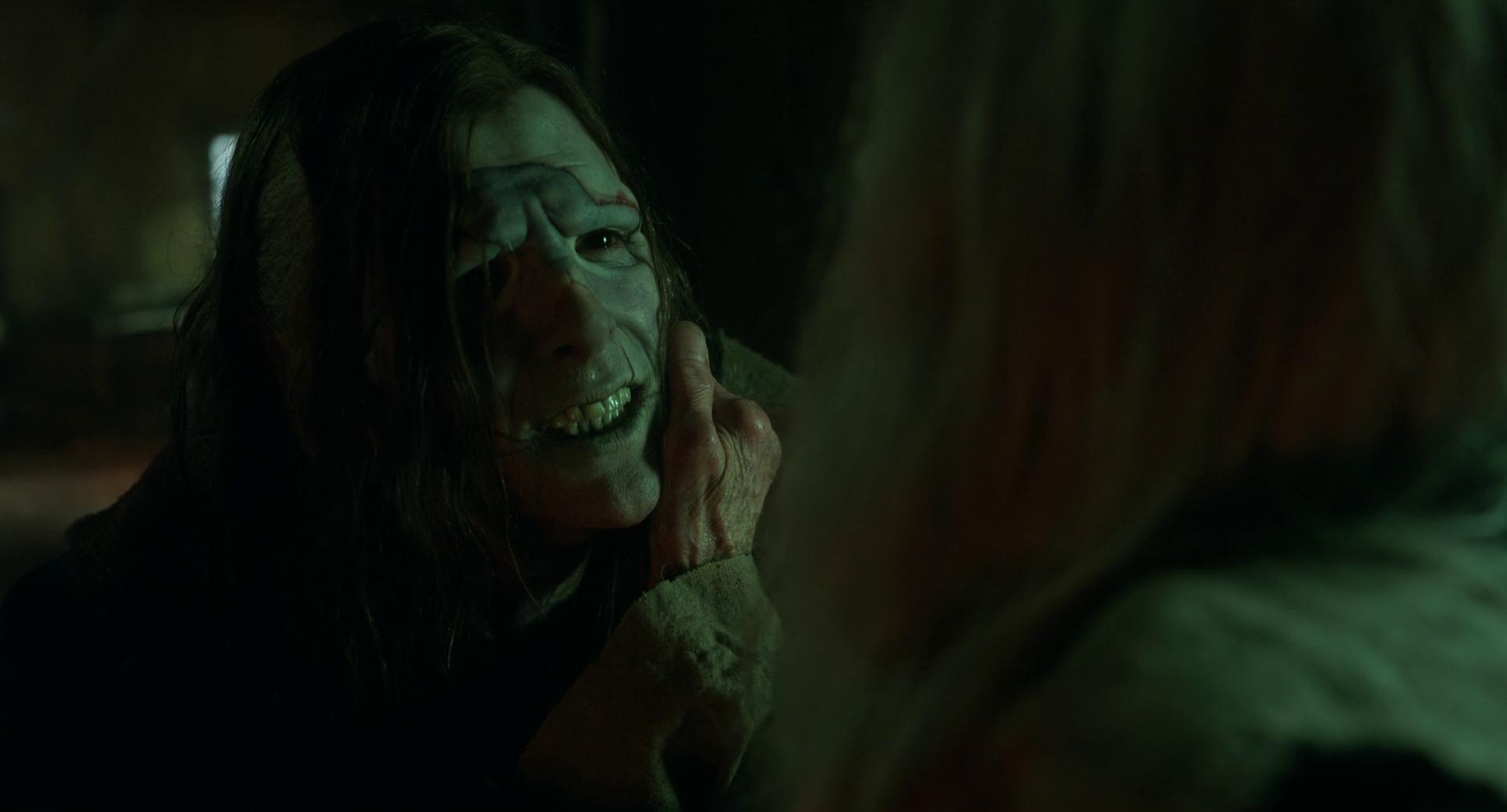
On Resurrecting the Gothic for a Modern Audience
If I had a nickel for every time Jacob Elordi was in a recently released gothic movie, I would have two nickels. Which isn’t a lot. Weird that it happened twice though.
Gothic media has historically used supernatural themes to narrate the pervasive and cruel undertones of human nature, which has led to its understanding as a subgenre to horror. It usually has qualities of sublimity that can be a haunting grandeur often nostalgic for a past era. Further on the sublimity, beauty and romanticism have been a cornerstone of the genre and it frequently forms itself as symmetry and proportions. If you haven’t been paying close attention to the box office, there have been several of these films including “Poor Things” (2023), “Nosferatu” (2024), “Wuthering Heights” (2026), and much more.
The gruesomeness plus the surreal nature of these monsters can lend a sense of catharsis, as it can seem so far out of reach in our reality. Post-global pandemic and a worldwide call to action for civil rights, “Wednesday”(2022), based on the young daughter from the Addams family, was the perfect shift from reality that many wanted at the time, leading to its exponential growth and acclaim. It was fantastical enough to counter the classic nature of a sitcom. It was released as a divergence from the real, right as there was an audience ready for an escape. With Poor Things releasing the following year and walking away with four Oscars, it is apparent that themes of conformity and autonomy were resonating with the American audience.
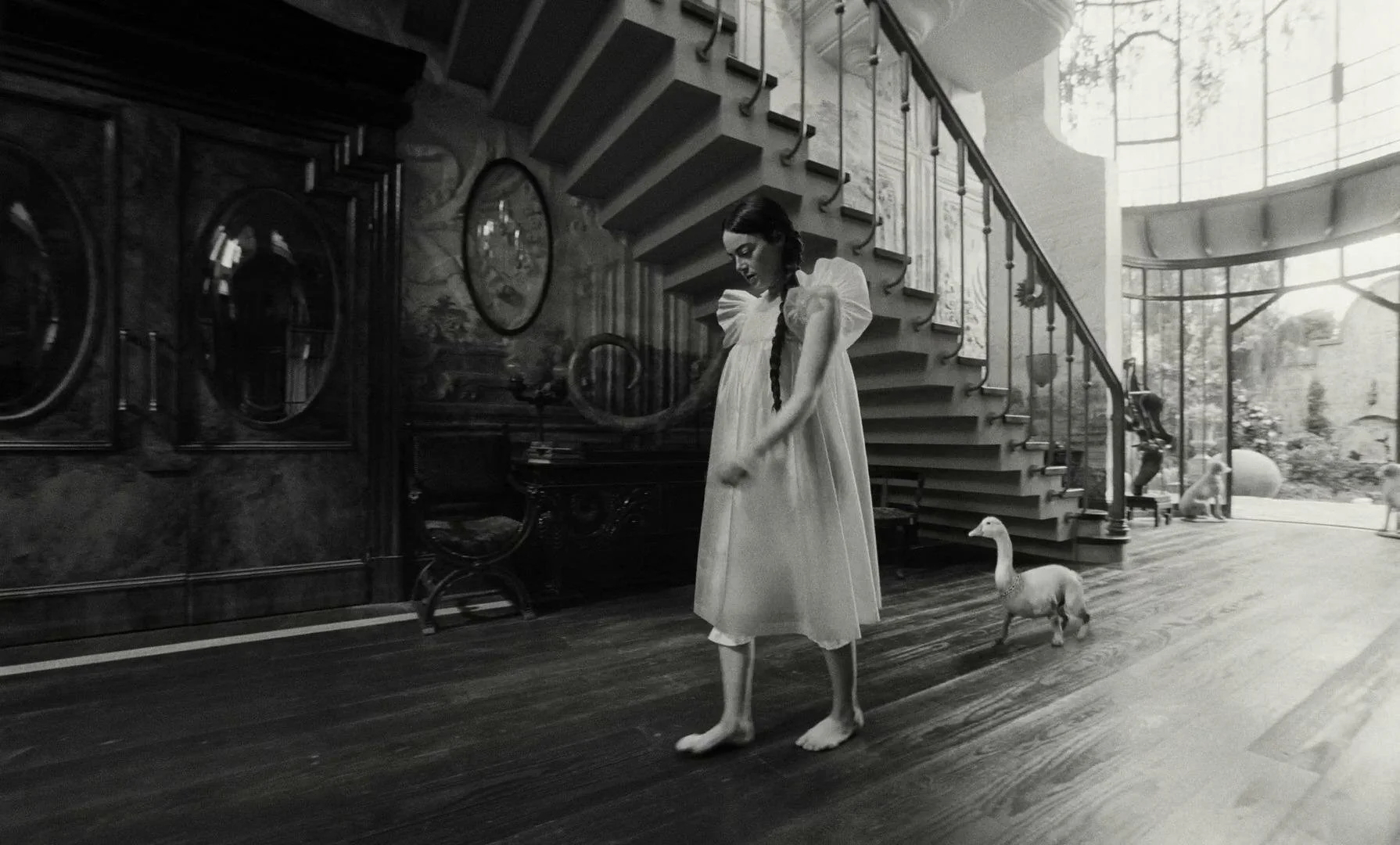
Emma Stone as Bella Baxter in “Poor Things” (2023)
Many of the gothics observe a female lead that is defiant to tradition and cultural norms. In a time when the manosphere captivates many, whether genuinely or ironically, the need for escape pushes forward films with a disconnection from reality. It reminds me of Nick Fuentes’ dehumanizing rambling upon Trump’s election win in 2024. I think it is this kind of rhetoric that calls for gothic works. When there are restrictions for women to cookie cutter themselves into domicile and submissive figures, art will always be made in opposition since expression is the protest of the oppressed. Bella Baxter, played by Emma Stone in “Poor Things”, is a monster, created and imposed on by a man. This becomes a common theme, and it is oddly, for its surreal nature, a constant theme in real women’s lives. From heavy christian nationalism and creation of men’s stories, Bella’s story becomes closer to reality.
The erosion of what we understand as normalcy has paved a way for gothic films to fill a theater. But, why now? There is more that is gravitating people to these movies, especially a younger audience, and it may come from fear of a changing world. Artificial intelligence has eaten up every part of our day. As a digital native, I have experienced both technology determining how I live, and my own determination of the use of technology. It is encapsulating. Although the resurgence of gothic could be accredited to a sense of nostalgia, I would frame it as a defiance from technological advancement. Historically, the genre was raised as an antithesis to the Enlightenment, which applied calculation and reason to life. As history is bound to repeat, the gothic relies on human nature as an explanation. It can strip down intellectual thinking to gratifications and desires. Looking back at “Poor Things”, Bella follows her own curiosity and pleasure to find understanding of the world around her. She seeks sexuality, art, and philosophy for answers to existence. This juxtaposes the algorithms and logic models that currently control curiosity. Similarly, “Wuthering Heights” explores the untamed and uncivilized versus high society, which reflects the disposition of gothics in response to enlightenment. Heathcliff embodies a raw and stormy nature that connects him to Catherine. It is the primitive that entrances the audience which is a departure from our reality.
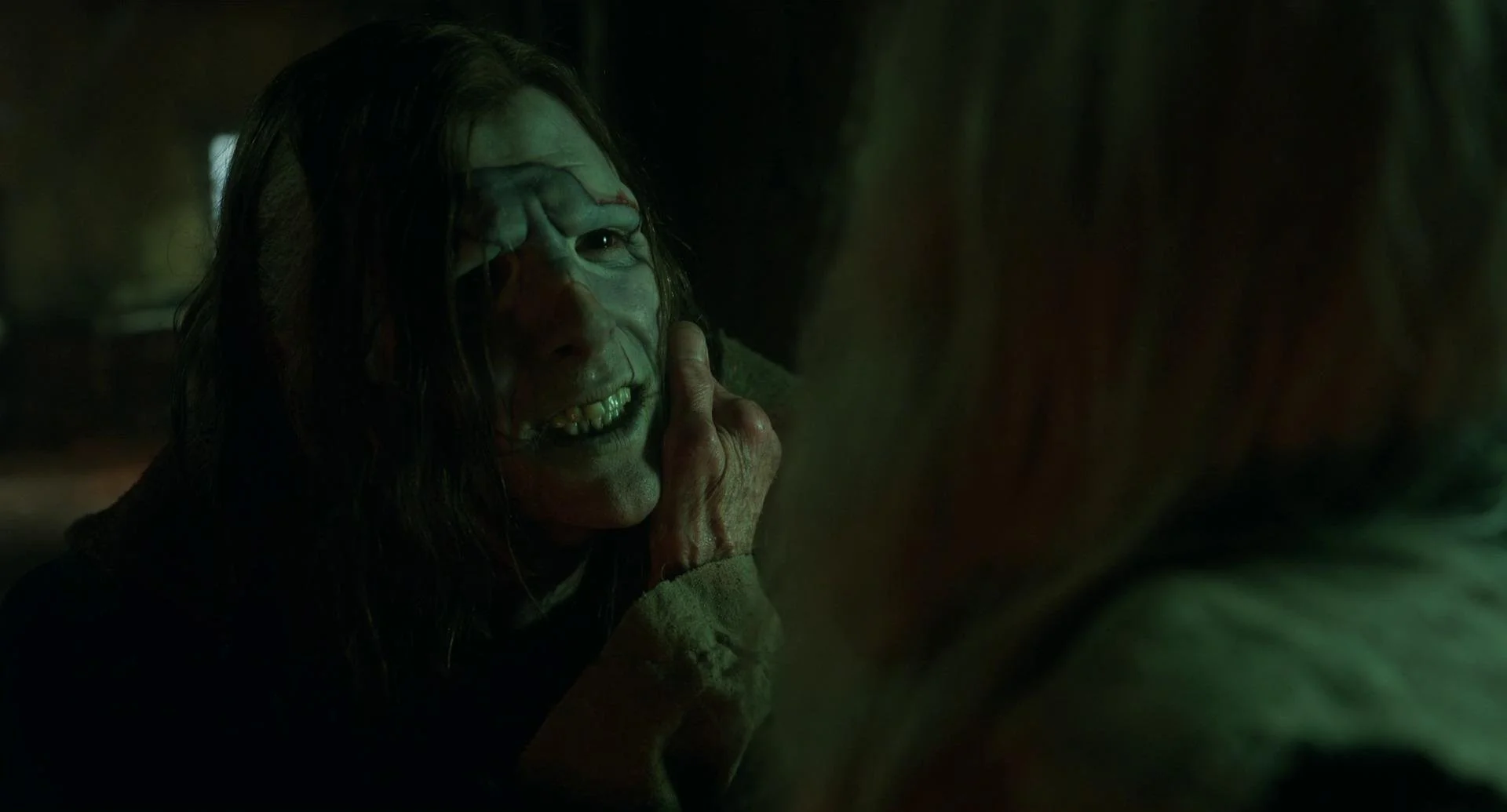
Jacob Elordi as Frankenstein in “Frankenstein” (2025)
As I have looked into this genre and why we need it right now, I can’t help but recognize the unanswered and assumed in these films. What is left blank is almost more important than what is clearly stated. In “Nosferatu”, Ellen Hutter, from her youth, is the subject of Count Orlok’s obsession, but it blurs as to how much of Ellen’s final act is a sacrifice for her town or for her own pleasure. Their bond isn’t defined traditionally, but left with the audience to decipher long after the credits have rolled. Obviously this is not exclusive to “Nosferatu” nor the gothic genre, but a part of any good story, to leave parts unexplored for the consumer.
In frankenstein-ing these concepts together, the gothic has disguised many social inequalities and insatiable passions. So maybe, figures like Jacob Elordi are the face of this movement with traditional dark and sullen features, as a fantasy of genuineness even in yearning and the grotesque. It can be the embodiment of desires for those who often feel oppressed and disrespected by society.
About the author: Avari Subee is a first year undergraduate student at the University of Oregon majoring in Biology and minoring in Art and Technology. She is always excited to talk about pop culture, art in any form, and Sudoku. Her favorite genre to read is literary fiction after reading “Tomorrow, and Tomorrow, and Tomorrow” by Gabrielle Zevin. With much left to do, she is determined to never let her figs rot.