
The Vernacular Of Destruction: Popular Culture and the Manosphere
You smashed that. I killed that. You came out guns blazing. She blew them away. Knock ‘em out. He’s the bomb. You’re a beast. They crushed that. They nailed that. Take a stab at it. You destroyed that.
These are all phrases that construct and normalize a vernacular of destruction. Why is it that we subconsciously utilize a canon (no pun intended) of violence to describe our accomplishments? Now, don’t shoot the messenger, but this kind of language is shaping the way we visualize the world around us. It actively normalizes the association between destruction and high performance, consequently manufacturing our societal definitions of success. Rooted in the United States history of violence, colonialism, and sexism, this lethal lexicon especially influences young boys. They grow up learning this harmful language without realizing its far-reaching consequences. While this language is not new by any means, we are living in an era when the manosphere’s weight is pressing down on the shoulders of our nation’s young men like never before.
“In this culture we celebrate boys through the lexicon of violence. ‘You're killing it,’ ‘you’re making a killing,’ ‘smash them,’ ‘blow them up,’ ‘you went into that game guns blazing,’ and I think it’s worth it to ask the question what happens to our men and boys when the only way they can valuate themselves is through the lexicon of death and destruction?
I think when they see themselves as only worthwhile when they are capable of destroying things, it’s inevitable that we arrive at a masculinity that is toxic” (Vuong, 2019).
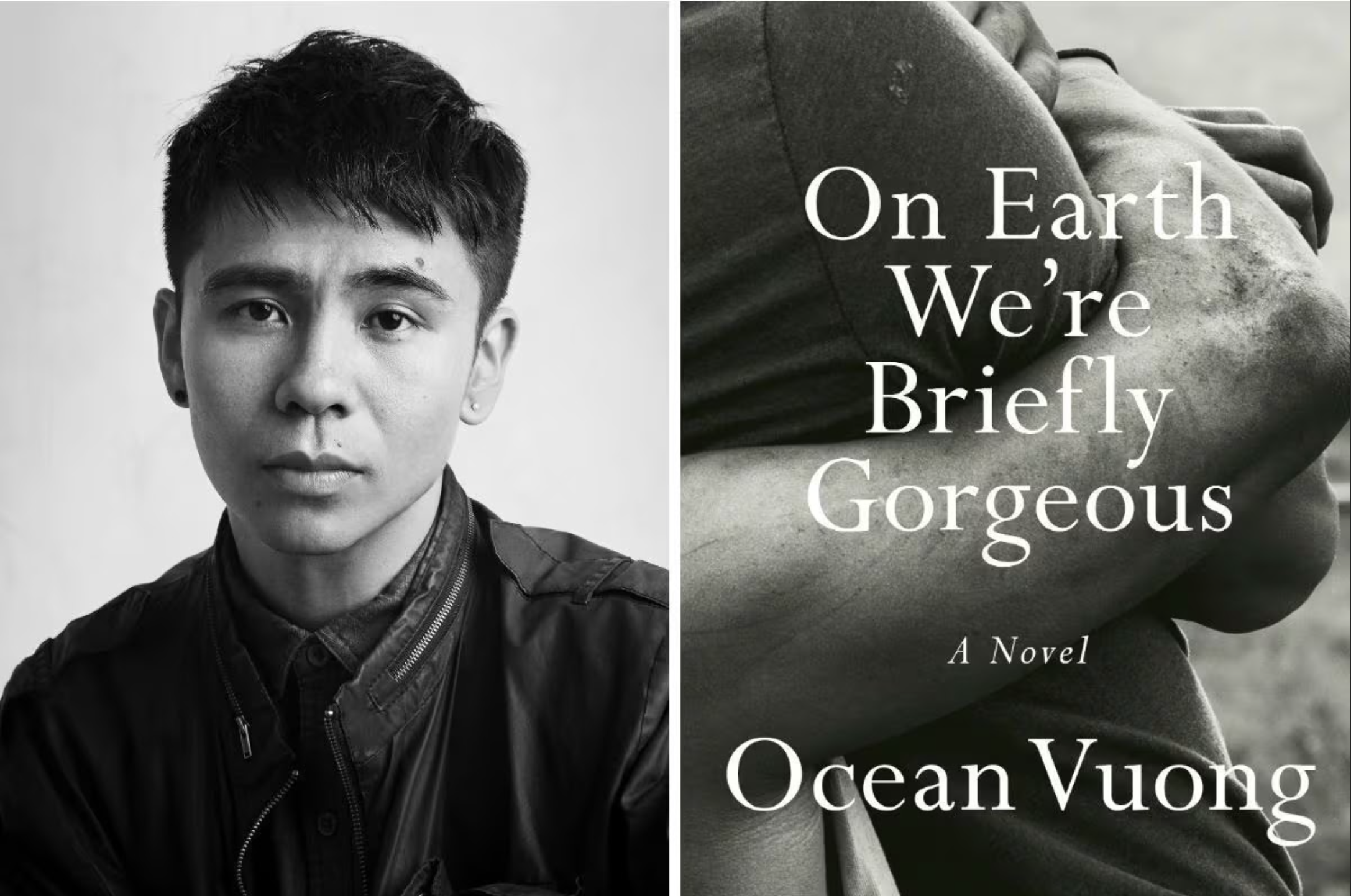
On Earth We’re Briefly Gorgeous (2019) - Ocean Vuong
Ocean Vuong, a brilliantly articulate Vietnamese-American poet, said this in an interview on Late Night With Seth Meyers in 2019. In Vuong’s debut novel, On Earth We’re Briefly Gorgeous, he examines the influence that the “lexicon of death and destruction” has on our sense of self. After reading his novel (which, by the way, is life-changing) I began noticing how often we use violent vocabulary to communicate our thoughts. For example, gun metaphors run rampant in our culture. When we take the chance to pursue a romantic interest we say we are “shooting our shot.” When we want to hype up our friends we nickname them “big shots” or “hot shots.” If you are strong, you are going to flex your “guns,” and if you want to get hammered with your friends, you “shotgun” a beer. All of these metaphors make the United States’ ubiquitous gun culture all the more visible. So even if you feel like you are distanced from physical violence, symbolic violence is everywhere. If we aimlessly use this vocabulary to frame our lives as moments of battle, attack, destruction, and havoc, then we become attached to dangerous hyperbolic methods of expression. Unfortunately, society rewards us when we perpetuate America’s history of militarization and conquest. Our unconscious reliance on symbolic violence makes it all the more evident that language reflects the extent to which we internalize the brutal parts of our nation’s history.

Additionally, there has been an extreme increase in colloquial violent language that describes Gen Z’s dating life. Whether it's getting “cracked,” “screwed,” or “banged,” our casual slang develops a culture that not only tolerates but celebrates sexual violence. More often than not, these words and phrases target women and perpetuate patterns of sexism. It is from this discourse that we actively shape our perceptions of what sex or dating should look like. Within the context of sex, the vernacular of destruction not only reproduces patriarchal values that position women as passive objects, but it also encourages the idea that heterosexual intimacy is actually not about intimacy at all. Instead, it suggests that sex is about men proving their masculinity by “winning” the woman. So even though reality TV shows like Love Island tell us to characterize women as “bombshells,” and even though you think you “rocked her world,” the reality is the vernacular of destruction has only inflated your ego.
All this language deeply weaves together to fuel dangerous standards of masculinity, thus making the manosphere more mainstream. All of a sudden, incel behavior works its way into popular culture, and young men all over the U.S. become desensitized to violent modes of thinking. Take Braden Peters, or his online persona, Clavicular, for instance. His entire platform thrives on the insecurities of young men in order to push for pseudoscientific methods of physical transformation. “Looksmaxing,” at its core, is synonymous with toxic self-improvement. It produces a subculture of young male narcissists obsessed with beauty standards that are rooted in incel behavior and the pursuit of whiteness. What is key, however, is that the vernacular that Clavicular uses masks the sinister consequences of his fame. While your boyfriend or brother claims Clavicular’s fandom is ridiculous, he probably still subscribes to the language Clavicular has made popular. Even if you’re not convinced that language is significant enough to influence our behavior, then surely you can agree that “bone-smashing” should not have a prominent place in our vocabulary.
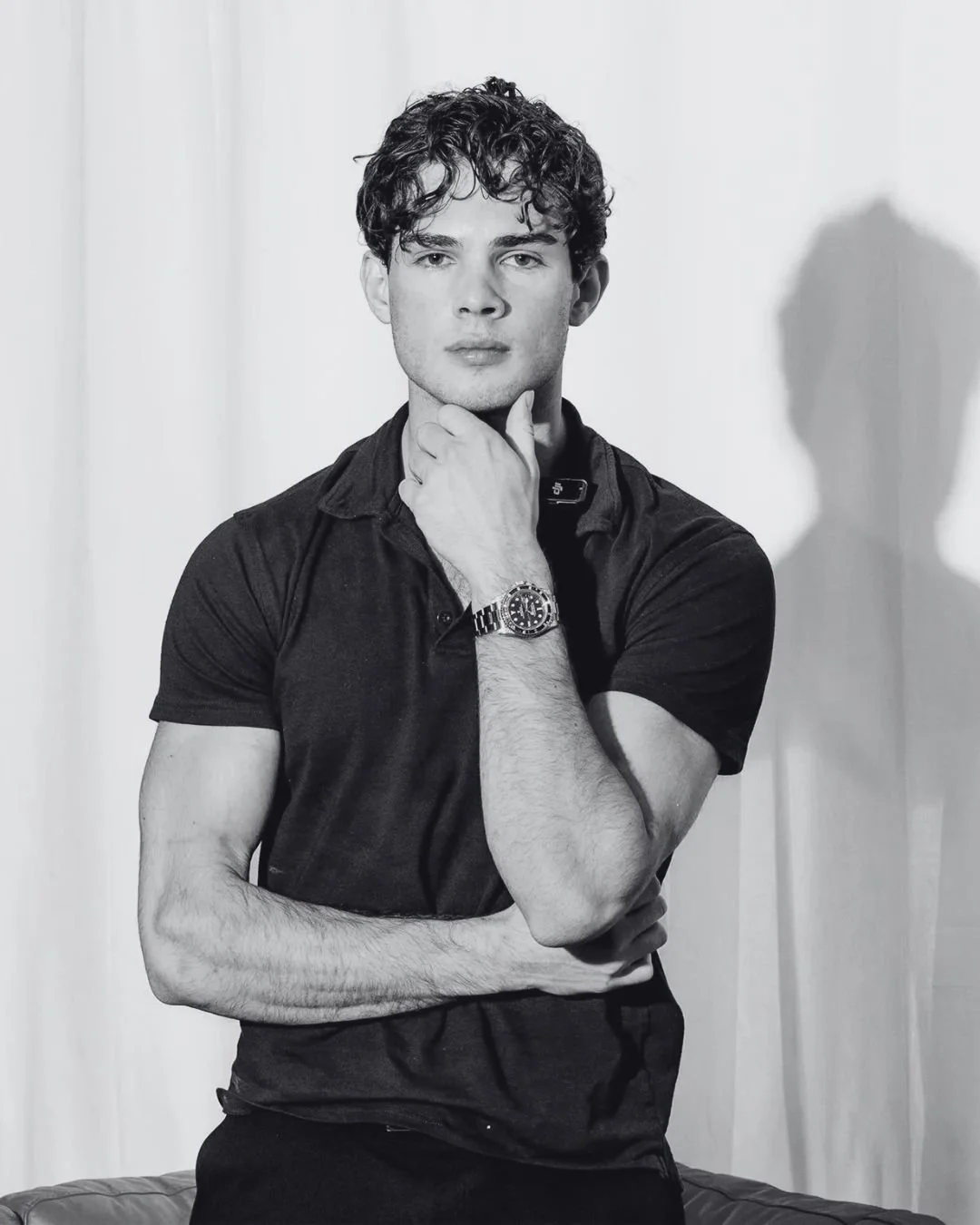
Braden Peters “Clavicular”
Your initial reaction might be that it’s just not that deep, or that I am making a big deal out of semantics. But if this lexicon of violence is “just semantics,” then we are ignorantly discrediting language’s influence over our collective perceptions. So the next time you find yourself using the newest slang, take a minute to research its roots. It really is that deep, and it matters more than we think!
Sources:
https://www.nytimes.com/2026/02/13/style/clavicular-looksmaxxing-braden-peters.html
https://www.theparisreview.org/blog/2019/06/10/no-homo/
https://www.tiktok.com/@etymologynerd?lang=en
Ocean Vuong - On Earth We’re Briefly Gorgeous (2019)
Images:
https://www.pinterest.com/pin/19281104652731465/
https://www.inquirer.com/arts/books/earth-briefly-gorgeous-ocean-vuong-bethany-ao-20190621.html
Cover Photo:
https://www.pinterest.com/pin/58195020179950427/

About the author:
Hannah Dean is a sophomore majoring in English and minoring in Dance at the University of Oregon. She is from the Big Island of Hawaii. She enjoys long conversations with her best friends, reading poetry she doesn’t understand, making bad photo art, camping, drinking ginger lemon honey tea, and laughing way too much while doing all those things.
You can find Hannah on Instagram at @hannahh.deannn if you want to see her photo art or reach out and be best friends!