
Black Musicians Who Broke the Rules and Rewrote the Industry
When many of us think of rock and roll, the names Elvis, The Beatles, The Rolling Stone and Queen quickly come to mind. Yet many of us don't know the name Little Richard, the one who started it all, the architect of rock and roll. Little Richard was born in 1932 and grew up in Macon, Georgia. He was the third child of Leva Mae and Charles “Bud’s” 12 kids. Richard's mother, Leva Mae, was a devout member of a local Baptist church. At a young age, Richard began singing at church while taking piano lessons. His small, skinny stature would earn him the nickname "Lil Richard.” A deformity that made one of his legs shorter than the other produced a unique gait that people deemed effeminate. Music, nicknames, and a leg abnormality made Little Richard stand out, forever influencing his legacy.
We all have things that make us different, weird, or offbeat. A tooth gap, an expansive collection of velvet stilts, or a strong conviction in playing the guitar backwards. Some of us are celebrated for our differences, encouraged to stand out in a crowd. Others are confined to false expectations, designed to restrict who we are. Our identities, racial, sexual, and gender, may confine us to particular stereotypes. We can stay within these parameters, blending into a crowd and going about our daily lives. Or, we can refuse to follow them, deviating from the norm, embracing difference, and sparking change.
As a Black woman, I have faced stereotyped expectations of how to be and act, time and time again. The phrase "you don't act Black enough" rings all too familiar, as people remain confused about my mannerisms, idiolect, interests, and hobbies that don't fit into their preconceived box for Black women. I could have succumbed to these expectations by acting inauthentically, avoiding further questioning. But I embraced the "weird,” celebrating the unique facets that made me stand out.
I think of those who inspire me, who did the same. Musicians, athletes, activists, classmates, friends, family, who caused bewilderment. I think about Little Richard, who always stood out and embraced it. I think of Jimi Hendrix, Aretha Franklin, Prince and Erykah Badu, who did the same. By stepping out of that imaginary, yet ever-present box, they made an impact, inspiring generations of Black people to be authentically themselves.
If Little Richard hadn't stuck to piano lessons and the church choir, we wouldn't have access to the gifts of these artists' creations. At the height of U.S. segregation in the 1950s, Little Richard's charismatic, flamboyant, omnisexual presence transcended the color line, inspiring all. Bob Dylan wrote in his senior yearbook that his life's ambition was to “join Little Richard." Young David Bowie bought a saxophone to learn Little Richard's "I Got It." Jimi Hendrix, quite literally, followed in Richie's footsteps, learning to imitate Little Richard’s voice with his guitar.
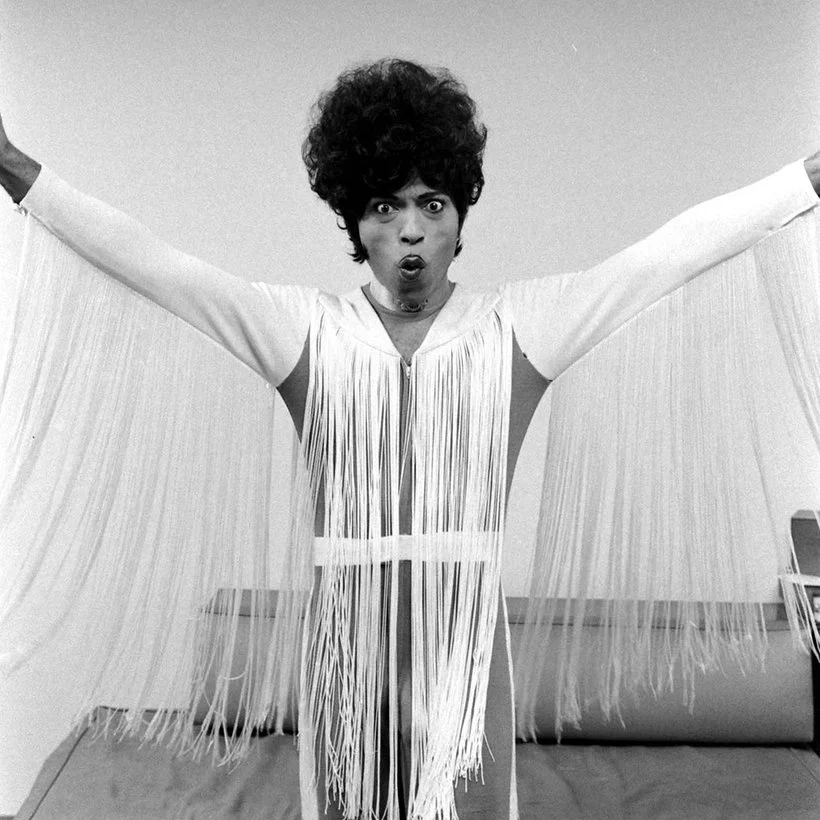
Little Richard
Little Richard was unapologetically himself, and clearly, people were inspired. Black people had hardly ever seen a Black church boy who grew up in the south be so openly queer in his peculiarity and his sexuality. White people couldn’t fathom the idea of a Black man being the face of rock and roll. "They didn't want a Black guy to be the one to create rock and roll because the white kids liked it, and they didn't want white girls screaming over no Black boy," Little Richard said in an interview on the Arsenio Hall Show. People labeled him as extra, conceited, and strange. But he didn't care. If he did, we wouldn't have understood the expansive power of the electric guitar, learned through Jimi Hendrix.
Spending only a few months as The Upsetters (Little Richard’s band) guitarist, Hendrix quickly picked up on his unique stage presence, fashion and musical energy. If Hendrix let preconceived expectations define him, he would have let his inability to read and write music steer him down a different path. He would have given up on playing his Fender Stratocaster because he was left-handed. Instead, Hendrix vowed to be different. He flipped his right-handed guitar, re-strung it, and adjusted the strap, throwing away traditional music theory and focusing on the buzz the music made him feel inside. Despite not meeting music conventions, he trusted himself. His confidence would influence several musical avenues, including blues, ballads, rock, R&B, and jazz.
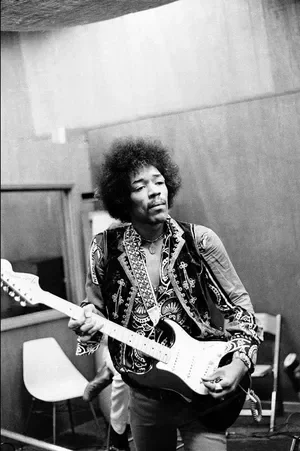
Jimi Hendrix
Another artist who broke the mold is Erykah Badu, the queen of neo-soul. Badu may be the chosen leader of this genre, but she sees herself as a jazz artist. "I love the idea of the instrumentation because I am a jazz artist," Badu told the New York Times. Badu's towering hats, silver grills, bright pink eye shadow, and chunky, asymmetrical jewelry captured many. Her nasal tone brought a new style to neo-soul. She made imperfection sound and look fresh. Badu's embracement of her spirituality reminds us of our roots. Her "Baduizm" embraces practices used by our African ancestors, who channeled divine powers to resist, survive, and unite. Practices that were demonized by whiteness as a means to control our beliefs, thoughts, and actions. Badu reminds us of this deep, spiritual connection that remains in all of us, but so many of us have lost because of fear.
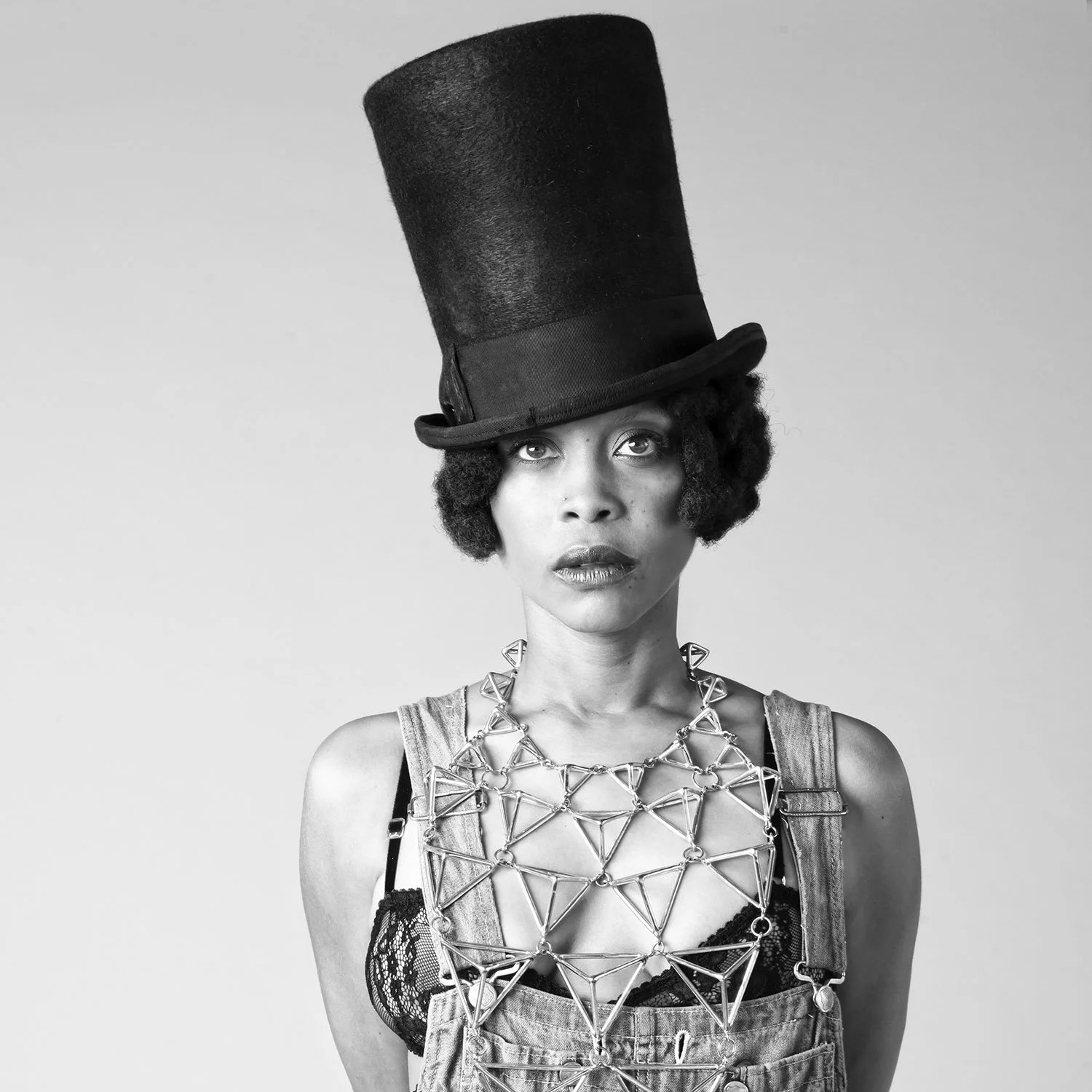
Erykah Badu
Badu, Hendrix, and Little Richard weren’t afraid. Their determination to challenge mainstream expectations would forever change the music industry. Despite what others may think, say, and challenge, they don’t define you. It would show me, whether I realized it or not, that there isn't one way to be Black. I get to define what Blackness means to me, and express that through my style, language, and art. You can be charismatic, spiritual, androgynous, psychedelic, ambiguous, vibrant, offbeat and still authentically Black. Whether most, some, or few people embrace it or not, we need a Little Richard, a Jimi Hendrix, and an Erykah Badu to show us that it's okay to step outside of the box.
Playlist by Isabella Thomas
Citations:
https://floodmagazine.com/77783/10-massive-artists-profoundly-inspired-by-little-richard/
https://www.nytimes.com/2025/10/23/arts/music/erykah-badu-interview-popcast.html
https://airmail.news/books/2021/1/big-little-life
https://www.seattletimes.com/entertainment/ernie-isley-remembers-jimi-hendrix/
https://www.northseajazz.com/en/program/2017/sunday-9-july/23942-erykah-badu
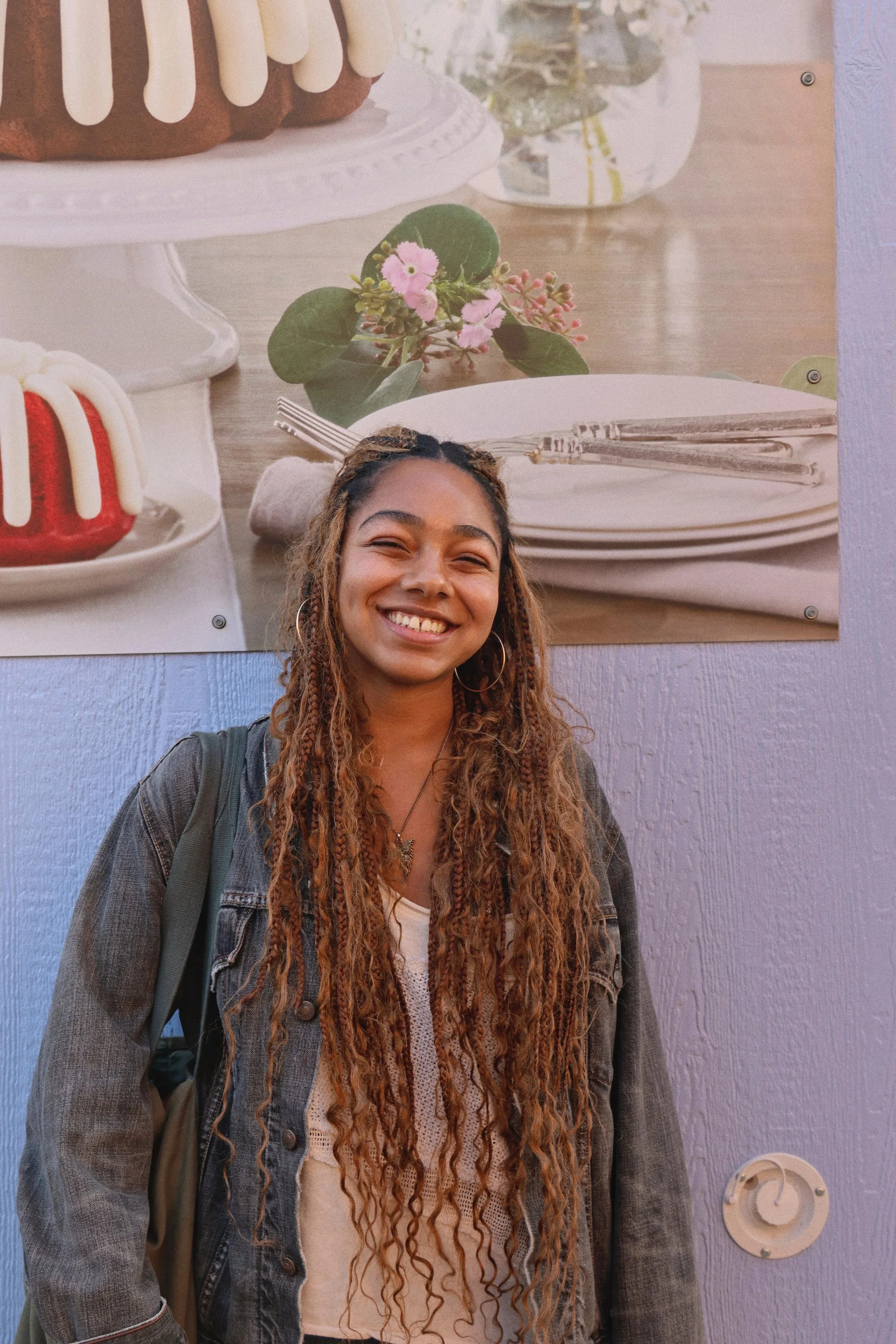
Skylar DeBose is a junior majoring in journalism and minoring in ethnic studies at the University of Oregon. She was born in Chicago, but spent most of her childhood growing up in Portland, Oregon. Skylar enjoys gardening, thrifting and dining out with friends, making playlists, and reading. Photo Credit: Amelia Gaviglio – Align Blog