
Disco is more than a music genre. It's a social movement that redefined who and what can be mainstream. Fueled by passion, resilience, and community, disco's impact was inevitable. It set a new standard that many of us continue to fight for today.
Disco emerged simultaneously with the race, sexuality, and gender movements that called for civil rights. During the day, people flooded the streets with protests and demonstrations demanding equality. At night, people took the movement underground, claiming their rights and freedoms on the dance floor. Ostracized from the traditional world, America's most marginalized communities refused to back down.
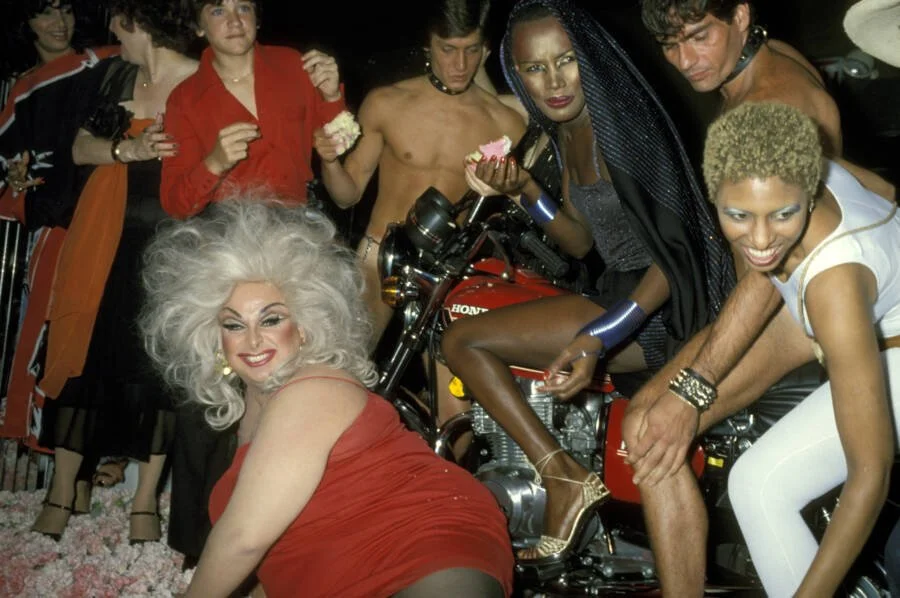
Divine, Grace Jones, and friends celebrate Jones' 30th birthday at Xenon Disco. — Courtesy of Ron Galella/Ron Galella Collection/Getty Images
Disco emerged from the abbreviation of discotheque, referring to European upscale dance venues that were home to Black music styles. This word took on the meaning known today, a musical genre that transformed underground dance sites in New York City. Throughout the 1970s, Black people, Latinos, and queer people gathered in basements, abandoned fire stations, and bathhouses where DJs synthesized soul, funk, and Latin American music. They made the party their own while transforming culture. The DJ emerged as a new party leader, bringing the disco beat to the dance floor, remixing traditional music forms, and tripling standard song lengths. Disco's unique integration of a distinct drum pattern, ornate string arrangements, and funky instrumentals redefined what music could sound like. Synthesizers and turntables added a playful style to live music so that no disco party was ever the same. The embrace of the 12-inch single mastered long-play versions that kept people on the dance floor until 10 a.m.
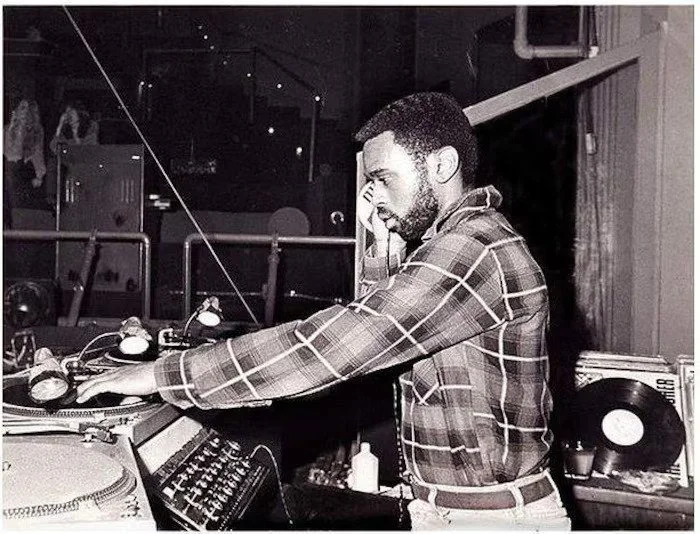
Tony Smith at Xenon (1980) — Courtesy of Tony Smith
Disco brought a new standard to fashion, redefining what it meant and looked like to be accepted. The American economy in the 1970s was characterized by stagflation, a combination of high inflation, staggering growth, and high unemployment. Despite this, disco called for absolute glamour. Instead of the plain clothing that characterized previous decades, people opted for a flashier form of expression: polyester shirts with perfect gleam, jumpsuits adorned in sequins, and voluminous hairstyles without a single strand out of place. Disco fashion redefined masculinity through its embrace of femininity. All people were encouraged to show off their bodies by moving their hips on the dance floor, going braless, or leaving their shirt unbuttoned. The rules were more than broken; they were erased. Through the world of disco, style was limitless.
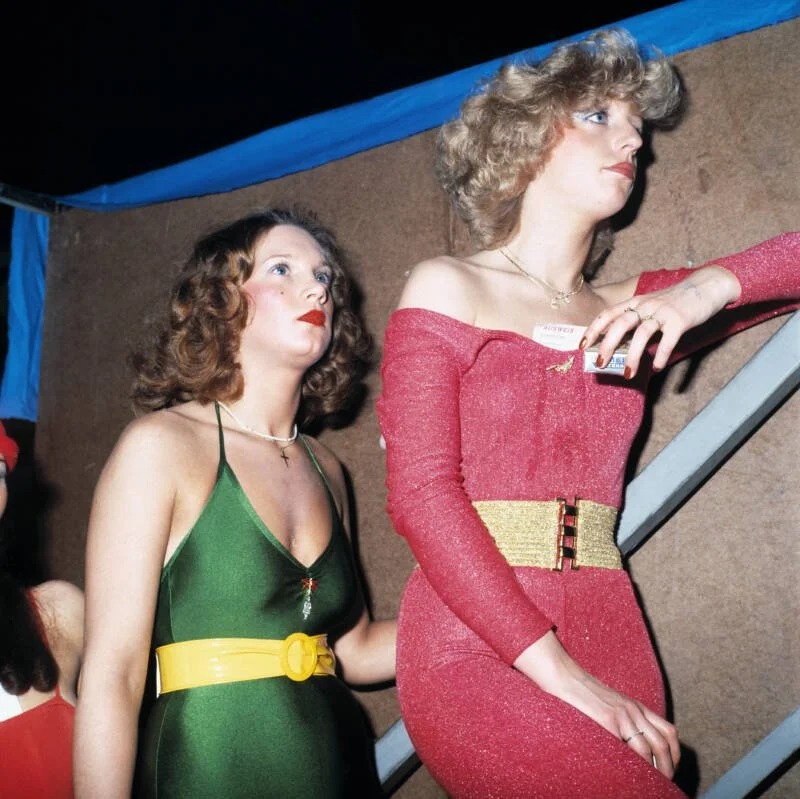
Women wait to compete at the Bild Disco discotheque. — Courtesy of Werner Otto/Alamy Stock Photo
With its rise in mainstream popularity, everyone wanted an invite to the party. Yet, not everyone was willing to embrace the culture. Studio 54 owner Steve Rubell was a strict enforcer of disco's fashion standards. If you didn't meet Rubell’s expectations, you weren't getting access to one of disco's most prominent venues. Many people, especially the blue-collar middle class, saw this as an attack on their sensibilities. Americans blamed economic challenges and cultural transformations on the rise of disco culture. Disco threatened traditional masculinity. Straight, white, cisgendered males were baffled and angered by the possibility of not being a part of something. They saw it as an attack on their privileges.
“Disco became the sonic accompaniment to joyous revolts against patriarchy and homophobia,” said Daphne Brooks, African American Studies Scholar.
The cultural attacks on disco came to a head when radio personality Steve Dahl was fired from Chicago's WDAI station after changing formats from rock and roll to disco. People were fed up. A culture war emerged. They were eager to rally against the “other.” On July 12, 1979, Dahl organized "Disco Demolition Night." For 98 cents, people could purchase a ticket to the event, which would take place between back-to-back White Sox baseball games. People overflowed Comiskey Park, shouting chants like "disco sucks" and jeering against the mentions of disco artists. Participants came prepared with disco records to be collected in a pile and blown up in the middle of the field. Disco Demolition Night would change the culture overnight. Bookings halted. Record deals stopped. Radio stations began to disregard the genre.
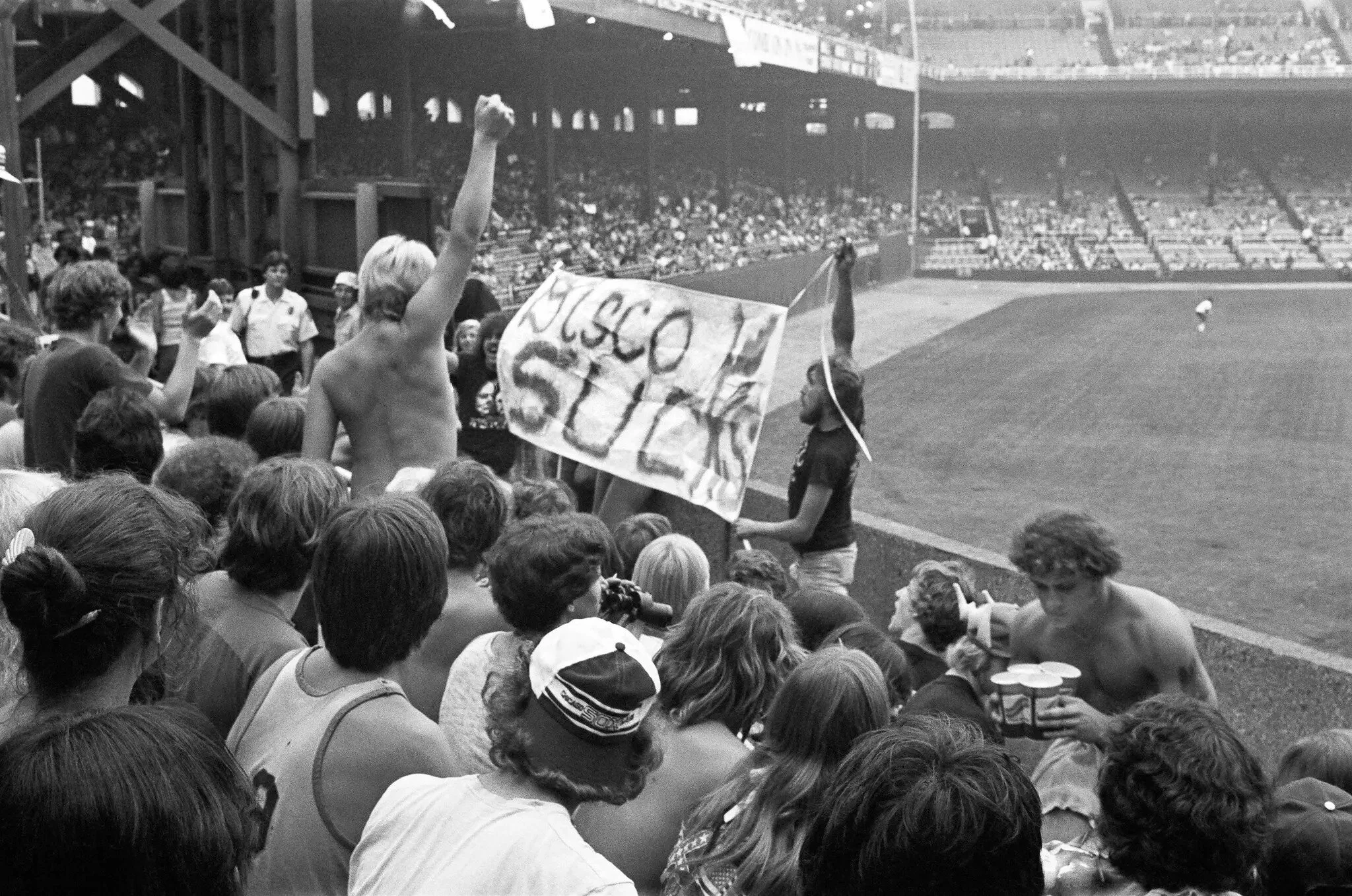
The crowd at Disco Demolition Night at Chicago’s Comiskey Park. — Courtesy of Diane Alexander White, via PBS
Disco's mainstream popularity may have been short-lived, but its legacy forever influenced social movements and culture. Coinciding with the civil rights, gay, and women's movements, disco provided an outlet for people to be themselves, despite their differences. It affirmed Black people, Latinos, queer people, and women's right to be a part of something, to be in community. Disco paved the way for hip-hop, electronic, and house music. The creations of Donna Summer, Earth, Wind & Fire, the Bee Gees, and Gloria Gaynor continue to inspire today's musicians. As we continue fighting for our fundamental rights and to celebrate our cultures, we carry forward the foundations of disco.
Citations:
American Experience: The War on Disco, Produced by Lisa Q. Wolfinger ; written and produced by Rushmore DeNooyer ; a Lone Wolf Media production for American Experience.; Arlington, VA : Public Broadcasting Service; 2023
https://timeline.carnegiehall.org/genres/disco
https://allthatsinteresting.com/disco-era-pictures#40
https://www.nytimes.com/2023/10/29/arts/television/the-war-on-disco-pbs.html
https://daily.redbullmusicacademy.com/2019/01/tony-smith-interview
https://www.buzzfeed.com/gabrielsanchez/pictures-that-show-just-how-crazy-1970s-disco-really-was
About the author: Skylar DeBose is a junior majoring in journalism and minoring in ethnic studies at the University of Oregon. She was born in Chicago, but spent most of her childhood growing up in Portland, Oregon. Skylar enjoys gardening, thrifting and dining out with friends, making playlists, and reading. Photo Credit: Amelia Gaviglio – Align Blog.